

Cone Beam CT (CBCT) scans are revolutionizing dental care. They offer detailed 3D images of the mouth and jaw. This technology is especially important for dental implants.
Traditional X-rays provide limited information. CBCT scans, however, give a comprehensive view of dental structures. This helps dentists plan implant procedures with precision.
The scan is quick and comfortable. It usually takes less than a minute. Patients experience less discomfort compared to traditional CT scans.
Radiation exposure is a concern for many. Fortunately, CBCT scans use significantly less radiation than conventional CT scans. This makes them a safer option for patients.
CBCT technology is advancing rapidly. It is becoming a standard tool in modern dental practices. Its benefits extend beyond implants, aiding in various dental procedures.
Understanding CBCT can help patients make informed decisions. Discussing this option with a dentist is a wise step.

Understanding Cone Beam CT (CBCT) in Dentistry
Cone Beam CT, often abbreviated as CBCT, is a type of specialized X-ray. It’s primarily used in dentistry to create 3D images of the patient’s oral anatomy. This imaging technique provides a much clearer picture than traditional X-rays.
The CBCT machine rotates around the patient. It captures numerous images from different angles. These are then compiled into a single 3D image. This process allows dentists to view bones, teeth, and soft tissues in detail.
CBCT is crucial for dentists when planning dental implants. It offers a precise assessment of bone structure and nerve pathways. This detailed view aids in accurate implant placement.
CBCT scans are versatile. Here’s a list of their common uses in dentistry:
- Assessing bone quality and quantity
- Identifying essential anatomical structures
- Evaluating the success of dental treatments
The demand for CBCT technology is increasing. Its ability to provide comprehensive images in a single scan is unmatched. As technology advances, its applications in dentistry continue to grow.
CBCT is a vital tool in modern dental practices. It’s not only beneficial for implant procedures but also enhances other dental treatments. Understanding how CBCT works can help patients feel more comfortable during the process.
How Does a Dental CBCT Scan Work?
A Dental CBCT scan is quite straightforward and patient-friendly. The process begins with positioning the patient on a special chair or table. The head is stabilized to ensure stillness during the scan.
Unlike a regular X-ray, the CBCT machine rotates around the patient’s head. This rotation captures multiple images from various angles. In less than a minute, the machine collects detailed data required for generating a 3D image.
The captured images provide a comprehensive view of the dental structures. This detail allows dentists to see everything in 3D, offering clarity on intricate oral anatomy. Dental CBCT scans are less invasive and comfortable for patients compared to traditional CT scans.
Benefits of Dental CBCT scans include:
- Quick and non-invasive
- Provides precise 3D images
- Enhanced view of dental structures
After the scan, dentists analyze the data. They use the information to plan and execute dental procedures. With the 3D images, dentists can simulate potential treatments digitally, enhancing their accuracy and effectiveness.
Why is CBCT Important for Dental Implants?
Cone Beam CT scans play a crucial role in dental implants. They offer unmatched precision for dentists during implant planning. Traditional X-rays fall short in providing such detailed imagery.
CBCT technology reveals the exact bone structure in the jaw. It shows critical details like bone density and structure which are pivotal for implant success. This information helps dentists decide the perfect spot for implant placement.
The 3D capability of CBCT is particularly beneficial. It allows dentists to visualize nerves and sinus cavities. Seeing these structures helps in avoiding complications during surgery, thus minimizing risks and ensuring safety.
With CBCT, potential problems can be identified before surgery. For instance, inadequate bone mass or unfavorable anatomical conditions can be assessed. This prior knowledge allows for adjustments in the treatment plan.
Key reasons CBCT is vital for implants include:
- Precise implant positioning
- Detailed views of anatomical structures
- Enhanced risk assessment
The benefits of using CBCT go beyond just precision. It offers confidence for both patient and dentist. With a clear plan in hand, procedures become smoother and more predictable.
Benefits of Cone Beam CT for Implant Planning
Cone Beam CT provides numerous advantages when planning dental implants. This technology significantly improves the precision and accuracy of the process. As a result, it leads to better outcomes.
One major benefit is the ability to assess the bone quality. Understanding the bone density and volume allows for optimal implant anchorage. This knowledge increases the likelihood of long-term success.
The safety of the procedure is also enhanced. CBCT offers detailed visualization of nerves and other structures to avoid during surgery. This reduces the risk of damaging these critical areas, ensuring a safer surgery experience.
The comprehensive 3D images also aid in pre-surgical simulations. Dentists can map out the surgery in a virtual environment, predicting and overcoming challenges beforehand. This foresight results in a more efficient procedure.
Advantages of Cone Beam CT in implant planning include:
- Detailed bone and tissue analysis
- Reduced surgical risks
- Enhanced pre-surgical simulations
These benefits make CBCT an invaluable tool in dentistry. Both patients and dentists gain confidence from the clarity and accuracy that CBCT provides. As the technology advances, its role in implant planning will continue to expand.
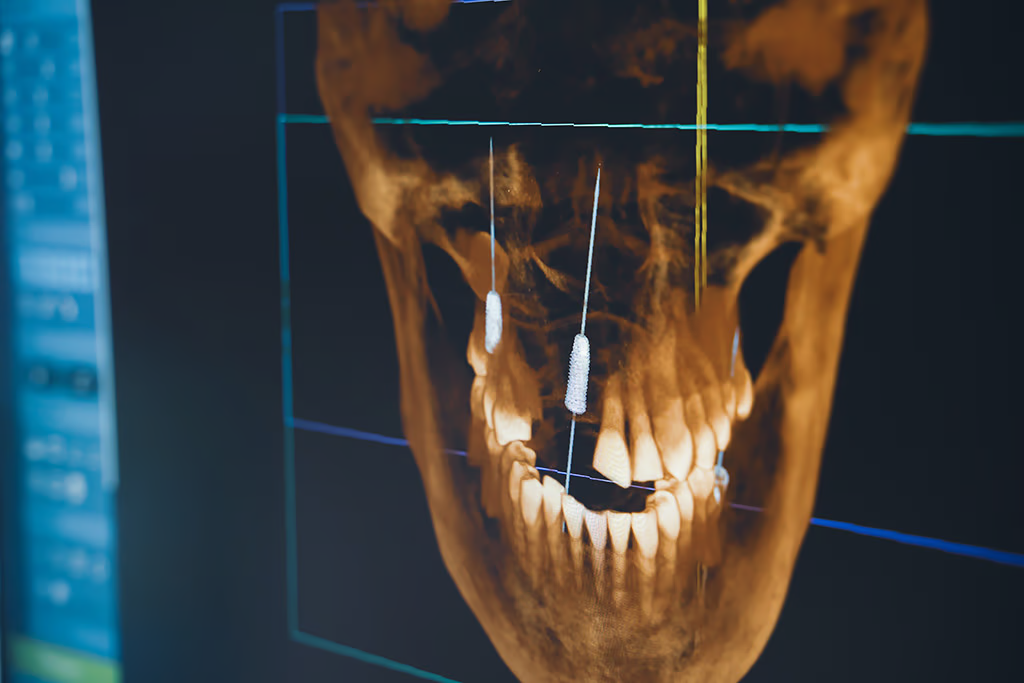
Comparing CBCT to Traditional Dental X-rays
Cone Beam CT offers significant advantages over traditional dental X-rays. While traditional X-rays provide 2D images, CBCT delivers detailed 3D views. This three-dimensional perspective is critical for complex dental procedures.
Traditional X-rays are often limited in their ability to reveal the full picture. They can miss certain dental structures due to their flat nature. In contrast, CBCT images provide comprehensive views of the oral cavity. This detail aids in diagnosing conditions more accurately.
CBCT scans also enhance diagnostic capabilities. They allow visualization of soft tissues, bones, and nerve paths in great detail. This precision helps in implant planning and other intricate treatments.
Key differences between CBCT and traditional X-rays include:
- Dimension: 3D vs. 2D
- Detail level: High vs. Moderate
- Diagnostic scope: Comprehensive vs. Limited
The comprehensive imaging of CBCT supports better clinical outcomes. Its ability to provide detailed views ensures accurate assessments and plans.
What to Expect During a 3D Dental Scan
A 3D dental scan using CBCT technology is a straightforward procedure. It is designed with patient comfort in mind. Understanding the process can ease any concerns or anxieties.
Upon arrival at the dental office, you will be guided to the scanning area. The dental professional will explain the procedure to you. You might need to remove any jewelry or metal objects from your head and neck area.
The scanning device consists of a chair or a standing platform and a rotating arm. You will sit or stand still while the machine moves around your head. The entire scan takes less than a minute to complete.
During the scan, you won’t feel any discomfort. The device emits a low dose of radiation, ensuring safety. The scan results are available almost immediately for review.
Steps of a 3D dental scan include:
- Preparation: Removing jewelry
- Positioning: Sitting or standing
- Scanning: Less than a minute
The quick and painless nature of the scan makes it patient-friendly.
Safety and Risks of Dental CBCT Scans
Cone Beam CT scans are generally safe for dental patients. They use a lower radiation dose than traditional CT scans. This makes CBCT a safer option for diagnostic imaging in dentistry.
However, like all X-ray procedures, there is some radiation exposure. It is important to minimize unnecessary scans. Dentists assess the necessity of a CBCT scan individually for each patient.
Certain groups, such as pregnant women, should inform their dentist prior to the scan. This allows the dental professional to take precautionary measures. Proper shielding techniques help protect vulnerable patients.
In summary, key safety considerations include:
- Lower radiation dose than conventional CT
- Informing the dentist if pregnant
- Assessing necessity on a case-by-case basis
Overall, the benefits of CBCT scans for dental implants outweigh the minimal risks.
Other Uses of CBCT in Modern Dentistry
Beyond dental implants, Cone Beam CT (CBCT) scans have diverse applications. They assist in diagnosing and treating many dental conditions. This versatility makes CBCT an invaluable tool in modern dentistry.
CBCT scans are frequently used in orthodontics for detailed views of teeth alignment. They help in planning complex surgeries and guide orthodontic treatments. Oral surgery benefits from enhanced accuracy in planning and execution.
These scans are also crucial in endodontics for root canal treatments. They offer clear images of the root canal anatomy. This helps dentists handle complex cases efficiently.
Key uses of CBCT in dentistry include:
- Diagnosing jaw disorders
- Evaluating impacted teeth
- Planning reconstructive surgeries
The wide-ranging applications of CBCT mark its significance in dental care.
Frequently Asked Questions About CBCT for Implants
What is a CBCT scan? A CBCT scan is a specialized X-ray that creates detailed 3D images of dental structures. It helps in accurate diagnosis and treatment planning.
Why do I need a CBCT scan for implants? CBCT scans provide crucial details about bone structure and quality. This information ensures precise implant placement, minimizing potential complications.
Is the CBCT scan process uncomfortable? Most patients find the CBCT scan quick and comfortable. The procedure is non-invasive and involves minimal movement, lasting less than a minute.
Are there any risks involved? CBCT scans involve low radiation exposure. However, they are generally safe. Pregnant women should inform their dentist to consider alternative imaging methods.
Common questions about CBCT scans include:
- What is the purpose of a CBCT scan?
- How long does the scan take?
- Is it safe for children?
Answering these questions helps reassure patients considering dental implants.
Conclusion: The Role of CBCT in Successful Dental Implants
Cone Beam CT scans are a game changer in modern dentistry. Their ability to provide precise, 3D images is invaluable. This technology has enhanced the precision of dental implant procedures significantly.
By offering detailed insights, CBCT scans ensure successful outcomes. They reduce the risk of complications and support effective treatment planning. Embracing CBCT technology is essential for achieving the highest quality dental care. This approach fosters better patient outcomes and increased satisfaction.
Contact Us
- instagram :@Healthioturkey
- Youtube :@healthioturkey
- Facebook : healthioturkey
- Whatsapp : +49 172 513 54 98