Getting dental implants in the UK or US costs, on average, $3,000–$5,000 per tooth. The dental implants cost in Turkey for the same procedure — using the same Swiss and Swedish implant brands found in London and New York clinics — is just $400–$900. That is a saving of up to 80%, before you have even booked your flight.
More than 400,000 international patients traveled to Turkey for dental treatment in 2023 alone, making it the world’s most visited country for dental tourism. This guide gives you an honest, patient-focused breakdown of dental implants cost Turkey covers — what you pay, what you get, which brands matter, how to stay safe, and how to plan your trip.
In this guide you will learn:
- Exact 2026 prices for single implants, All-on-4, All-on-6, and full-mouth restorations
- Side-by-side cost comparison: Turkey vs UK, USA, and Germany
- Which implant brands Turkish clinics use — and which to avoid
- Red flags that signal a low-quality clinic
- How to plan your two-visit trip from start to finish
Table of Contents
- How Much Do Dental Implants Cost in Turkey?
- Turkey vs UK, USA and Germany: Cost Comparison
- What’s Included in a Turkey Dental Implant Package?
- Which Implant Brands Do Turkish Clinics Use?
- The Dental Implant Procedure in Turkey: Step by Step
- Is It Safe to Get Dental Implants in Turkey?
- How to Choose the Right Clinic
- Top Cities for Dental Implants in Turkey
- Aftercare: What to Do When You Get Home
- FAQ
How Much Do Dental Implants Cost in Turkey?
Dental implants cost in Turkey varies based on the implant brand, the type of restoration, and whether you need additional procedures like bone grafting or a sinus lift. Understanding dental implants cost Turkey across different treatment types helps you budget accurately. Here are the 2026 benchmarks:
Single tooth implant (implant + abutment + crown):
- Budget tier (Osstem, MegaGen): $400–$600
- Premium tier (Straumann, Nobel Biocare): $600–$900
All-on-4 (full arch, 4 implants + fixed bridge):
- Per arch: $2,100–$7,000
- Both arches: $4,200–$12,000
All-on-6 (full arch, 6 implants + fixed bridge):
- Per arch: $5,500–$9,200
- Both arches: $11,000–$18,400
Full mouth (individual implants, 8–12 per arch):
- Complete restoration: $6,000–$15,000
The Turkey dental tourism market reached $284 million in 2024 and is forecast to grow at a 23.94% CAGR through 2030, according to TechSci Research — reflecting the sheer volume of patients choosing Turkey for affordable, high-quality implant treatment.
Additional procedures that affect the final price include bone grafting ($200–$500 per site), sinus lift surgery ($400–$800), and tooth extractions ($50–$150 each). Your clinic should always include these in a written treatment plan before you travel.
Turkey vs UK, USA and Germany: Cost Comparison
The table below shows verified 2026 price ranges for a single implant and All-on-4 per arch across four countries, using the same premium implant brands. It makes the dental implants cost Turkey advantage impossible to ignore.
| Treatment | Turkey | UK | USA | Germany |
|---|---|---|---|---|
| Single implant (Straumann) | $600–$900 | $2,500–$4,000 | $3,000–$5,000 | $2,000–$3,500 |
| Single implant (Osstem) | $400–$600 | $1,500–$2,500 | $2,000–$3,500 | $1,200–$2,000 |
| All-on-4 (per arch) | $2,100–$7,000 | $10,000–$18,000 | $15,000–$25,000 | $12,000–$20,000 |
| All-on-6 (per arch) | $5,500–$9,200 | $14,000–$22,000 | $18,000–$30,000 | $14,000–$24,000 |
Real total cost matters. Add a return flight from London ($150–$350), seven nights in a 4-star hotel ($400–$700 on a self-pay basis, or included in the package), and you still save 50–70% compared to having the same treatment at home.
Many patients planning full-mouth restorations save $20,000–$30,000 even after accounting for all travel costs. That is why implant treatment remains the single largest revenue-generating segment in Turkey’s dental tourism sector.
What’s Included in a Turkey Dental Implant Package?
Reputable clinics in Turkey offer all-inclusive dental implant packages designed specifically for international patients. A quality package covers:
- Full consultation and treatment planning
- Panoramic X-ray and 3D CT scan
- Implant placement surgery (with local anesthesia)
- Temporary teeth during the osseointegration period
- Permanent abutment and crown at your second visit
- All medications: antibiotics, painkillers, antiseptic mouthwash
- 5-star hotel accommodation (typically 5–7 nights per visit)
- VIP airport–hotel–clinic transfers for all appointments
- Dedicated patient coordinator (English-speaking)
- Lifetime guarantee on the implant body
The two-visit model is standard for most implant cases. Your first trip covers implant placement and lasts 5–7 days. You return home while osseointegration — the process by which titanium fuses with your jawbone — takes 3–6 months. Your second trip, also 5–7 days, covers the final crown fitting. Some clinics offer immediate-load implants for straightforward cases, completing treatment in a single extended visit.
Always request a fully itemized written quote before booking. Reputable clinics provide this without hesitation.
Which Implant Brands Do Turkish Clinics Use?
The implant brand is the single most important variable in your long-term outcome. Not all implants are equal, and some clinics use unbranded or counterfeit systems to cut costs.
Premium tier — the gold standard:
Straumann (Switzerland) is the most widely cited top-performing brand globally. Clinical studies confirm a long-term success rate of 98–99% over 10 years. Straumann’s SLActive® surface technology accelerates osseointegration, which is especially valuable for patients with lower bone density. In Turkey, a single Straumann implant typically costs $600–$800 — compared with $3,000–$5,000 in the US.
Nobel Biocare (Switzerland/Sweden) pioneered the science of osseointegration and developed the All-on-4 concept. Its TiUnite® surface delivers excellent primary stability, particularly in softer bone. Nobel Biocare implants in Turkey run $600–$1,250 per unit, versus $2,500–$6,000 in the US.
Mid-range tier — solid performance:
Osstem (South Korea) is the highest-volume implant brand in the world by units placed. It delivers strong clinical results at a more accessible price point and carries substantial peer-reviewed research. MegaGen is another Korean brand with growing market share, though it has fewer decades of long-term data than Straumann or Nobel.
What to avoid: Any clinic that cannot tell you the implant brand name, or that quotes a price significantly below the market floor ($300 for a single implant), is a red flag. Unbranded implants have no peer-reviewed track record and no guaranteed parts availability for future replacement.
Ask your clinic directly: “Which brand of implant will you use, and can you show me the documentation?”
The Dental Implant Procedure in Turkey: Step by Step
Understanding the full timeline removes uncertainty and helps you plan your trip accurately.
Step 1: Online Consultation and Treatment Planning
Before you travel, your clinic conducts a virtual consultation using photos and any existing X-rays. Many clinics then request a 3D CT scan from a local radiologist near your home, which they analyze to create a detailed treatment plan. You receive a written cost breakdown and trip schedule before committing.
Step 2: First Visit — Implant Placement (5–7 days)
On arrival, your clinic performs a full in-person assessment and 3D scan if not already completed. The implant placement surgery takes 1–2 hours for a single implant under local anesthesia, or 3–4 hours for an All-on-4 full-arch restoration. You leave the clinic with temporary teeth on the same day in most cases.
Step 3: Osseointegration at Home (3–6 months)
You return home while the titanium implant fuses with your jawbone. This biological process takes a minimum of three months for standard cases. For patients who required bone grafting or a sinus lift, the healing period extends to six months. Your clinic stays in contact throughout this phase.
Step 4: Second Visit — Permanent Crown Fitting (5–7 days)
You return to Turkey for abutment placement and crown fitting. The lab crafts your custom zirconia or porcelain-fused-to-metal crown while you are in the country, and your dentist fits and adjusts it to a precise bite. You leave with your final permanent teeth.
Is It Safe to Get Dental Implants in Turkey?
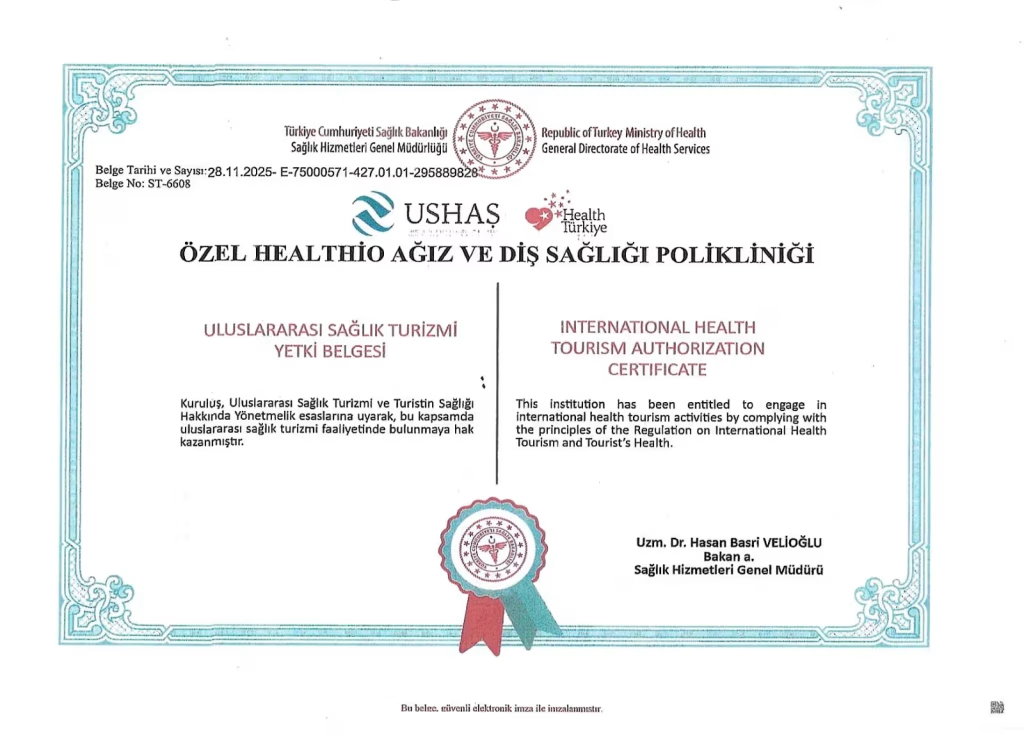
Turkey’s dental sector operates under government regulation. The Ministry of Health requires an International Health Tourism Authorisation Certificate for all facilities serving international patients, and clinics must meet defined standards for sterilization, equipment, and clinical qualifications.
Top-tier Turkish clinics report 97–99% implant success rates using premium branded systems. The overall dental tourism industry’s scale — 400,000+ patients per year — means that leading clinics have placed tens of thousands of implants and refined their protocols accordingly.
That said, the quality gap between clinics is real. Here are the red flags that identify clinics to avoid:
- Same-day full-mouth implants advertised without qualification — quality osseointegration cannot be rushed
- Prices below $300 per single implant — this signals unbranded or counterfeit implant use
- No 3D CT scan before surgery — planning without 3D imaging increases surgical risk
- The clinic cannot name its implant brand — a fundamental transparency failure
- No written guarantee or aftercare policy — leaves you unprotected if complications arise
- Newly opened clinics serving only foreign patients — limited track record and no local accountability
- No English-speaking coordinator or patient support — communication gaps create clinical risk
Choosing an accredited clinic with a verifiable track record eliminates the vast majority of these risks.
How to Choose the Right Clinic
Use this five-point checklist before confirming any clinic:
- Accreditation: Confirm the clinic holds a Turkish Ministry of Health International Health Tourism Authorisation Certificate. JCI accreditation is an additional quality marker worth verifying.
- Implant brand: Ask for the exact brand and model. Accept only Straumann, Nobel Biocare, Osstem, or another named, internationally researched system.
- 3D CT scanning: Confirm that 3D cone beam CT imaging is standard practice for all implant planning — not optional.
- Patient reviews: Read reviews on independent platforms (Google, Trustpilot, Bookimed) with specific mention of implant treatment — not just veneers or whitening.
- Written guarantee: Request the clinic’s written guarantee policy for the implant body and ask what happens if you need follow-up care after returning home.
Five questions to ask every clinic:
- Which implant brand and model do you use?
- Do you perform 3D CT scanning for all implant cases?
- What does your all-inclusive package cover, itemized?
- What is your policy if I experience complications after I return home?
- Can you provide references from previous international implant patients?
healthioturkey.com pre-screens clinics against all five criteria, matches you with the right specialist for your case, and handles your complete trip coordination — from consultation request to hotel booking and airport transfer. You can also explore our dental implant treatment packages for a full overview of what we offer.
Top Cities for Dental Implants in Turkey
Patients researching dental implants cost Turkey often ask which city gives the best value. Antalya is Turkey’s dental tourism capital and handles the largest share of international dental patients. Its combination of beach resort infrastructure, direct international flights, and a dense concentration of specialist implant clinics makes it the most practical destination for most travelers.
Istanbul offers the broadest range of clinics, including some of Turkey’s largest hospital-affiliated dental centers. Istanbul is the best option for complex cases requiring multi-specialty collaboration, such as full-mouth reconstructions involving oral surgery and prosthodontics.
Izmir is a quieter alternative with an international airport, a relaxed coastal atmosphere, and a growing number of high-quality dental clinics. It suits patients who prefer a slower-paced setting during their recovery days.
Practical logistics:
- Most nationalities enter Turkey visa-free or obtain an e-visa online within minutes
- Direct flights from London, Frankfurt, Amsterdam, and Dubai connect to all three cities
- All packages include airport pickup, so no local navigation is needed on arrival
Aftercare: What to Do When You Get Home
The weeks immediately after implant placement are critical to successful osseointegration. Follow these guidelines:
First 72 hours:
- Eat soft foods only (yogurt, soup, mashed vegetables)
- Apply ice packs to reduce swelling — 20 minutes on, 20 minutes off
- Take all prescribed antibiotics for the full course
- Avoid smoking entirely — smoking is the leading cause of implant failure
First two weeks:
- Brush gently around the implant site with a soft-bristle brush
- Use the prescribed antiseptic mouthwash after meals
- Avoid hard, crunchy, or sticky foods at the implant site
Long-term maintenance:
- Use implant-specific interdental brushes or water flossers daily
- Schedule professional cleanings every six months and tell your hygienist about your implants
- Book a check-up with a local dentist at the three-month mark to monitor healing
- Contact your Turkish clinic immediately if you experience persistent pain, unusual swelling, or implant movement — most clinics offer remote support and can guide you on next steps
With proper care, titanium implant posts routinely last 20–25 years or longer. The prosthetic crown may require replacement after 10–15 years due to normal wear, but the implant itself becomes a permanent part of your jaw.
Conclusion
Dental implants in Turkey deliver a compelling combination that is genuinely difficult to match elsewhere: Swiss and Swedish implant brands, digital 3D-guided surgery, all-inclusive travel packages, and dental implants cost Turkey figures that run 60–80% below UK, US, and German prices. The 400,000+ patients who travel to Turkey each year for dental care reflect a sustained track record, not a trend.
The key is choosing the right clinic — one that uses a named premium brand, performs 3D CT imaging, provides a written guarantee, and offers genuine aftercare support. Get that right and the savings are real, the results are durable, and the experience is straightforward.
Contact healthioturkey.com for a free consultation — receive a personalized treatment plan, itemized cost estimate, and full trip coordination from a team that has helped thousands of international patients access Turkey’s best dental clinics.
Turkey’s dental sector is ready. Your new smile is one trip away.
FAQ
How much do dental implants cost in Turkey?
A single dental implant in Turkey costs between $400 and $900, depending on the brand and clinic. All-on-4 full-arch restorations range from $2,100 to $7,000 per arch — roughly 60–75% less than equivalent treatment in the US or UK. Full-mouth restorations run $6,000–$15,000 in total.
Is it safe to get dental implants in Turkey?
Yes, when you choose an accredited clinic using premium implant brands like Straumann or Nobel Biocare. Top Turkish clinics report 97–99% success rates over 10+ years. Verify JCI accreditation or a Ministry of Health International Health Tourism certificate, confirm 3D CT scanning is standard practice, and always get a written guarantee.
How many trips do I need for dental implants in Turkey?
Most patients need two trips: the first visit (5–7 days) for implant placement, followed by 3–6 months of osseointegration at home, then a second visit (5–7 days) for the permanent crown fitting. Same-day implants are available for straightforward cases where bone volume and density allow it.
What does an all-inclusive dental implant package in Turkey include?
A standard all-inclusive package covers the implant, abutment, and crown, plus 3D CT scan, panoramic X-ray, temporary teeth, all medications (antibiotics, painkillers, mouthwash), 5-star hotel accommodation, VIP airport–clinic transfers, and an English-speaking patient coordinator. Most reputable clinics include a lifetime guarantee on the implant body.
Which implant brand is best in Turkey?
Straumann (Switzerland) and Nobel Biocare (Switzerland/Sweden) are the gold standard, with 10-year clinical success rates of 98–99%. Osstem (South Korea) offers excellent quality at a more affordable price point and has strong peer-reviewed research behind it. Never accept treatment from a clinic that cannot name the implant brand it uses.