Nearly 96% of people say an attractive smile makes a person more appealing — yet millions live with stained, chipped, or uneven teeth they feel powerless to change. Porcelain veneers before and after photos tell a different story: a single cosmetic dental procedure can deliver a complete smile makeover in as little as five days.
This guide walks you through exactly what happens before and after porcelain veneers — the procedure, the real results, who qualifies, and why thousands of patients choose Turkey to get it done at a fraction of the cost.
What you will learn:
- What porcelain veneers are and which problems they fix
- The step-by-step treatment process from consultation to final reveal
- Clinical evidence on how long results last
- How to tell if you are a good candidate
- Why Turkey has become the world’s leading destination for veneer treatments
Table of Contents
- What Are Porcelain Veneers?
- Common Dental Problems Veneers Can Fix
- The Porcelain Veneers Procedure: Step by Step
- Porcelain Veneers Before and After: What Real Results Look Like
- Are You a Good Candidate for Porcelain Veneers?
- Porcelain vs. Composite Veneers: Which Is Right for You?
- How Long Do Porcelain Veneers Last?
- Getting Porcelain Veneers in Turkey
- Porcelain Veneers Aftercare: How to Make Them Last
- FAQ
What Are Porcelain Veneers?
Porcelain veneers are ultra-thin, custom-crafted ceramic shells bonded permanently to the front surface of your teeth. Each shell is typically 0.5–0.7 mm thick — roughly the width of a contact lens — yet strong enough to withstand everyday biting forces for over a decade.
Porcelain is the material of choice for cosmetic dentistry’s most demanding cases. It mimics the light-reflecting properties of natural tooth enamel better than any other material, creating a result that looks completely natural even under direct light. The global dental veneers market reflects this preference: porcelain veneers account for 67.9% of the worldwide market share in 2025, according to industry analysis by Coherent Market Insights.
Unlike crowns, which cap the entire tooth, veneers preserve the majority of your natural tooth structure. Unlike whitening, they correct shape, size, and symmetry — not just color.
Common Dental Problems Veneers Can Fix
The “before” in any porcelain veneers before and after case typically involves one or more of the following:
- Deep staining from coffee, tea, red wine, or tetracycline antibiotics that does not respond to professional whitening
- Chipped or cracked teeth that affect the smile line
- Small gaps (diastemas) between teeth
- Minor crowding or misalignment where orthodontics would take years
- Uneven tooth length — teeth that appear too short, too long, or inconsistent in size
- Worn enamel that makes teeth look flat, small, or discolored
Veneers address all of these in a single treatment course. That versatility is why cosmetic dentists refer to them as “the most complete smile makeover solution available without surgery.”
The Porcelain Veneers Procedure: Step by Step
Understanding the full process sets realistic expectations and removes anxiety. Here is exactly what happens from your first appointment to your final reveal.
Step 1: Consultation and Digital Smile Design
Your dentist performs a comprehensive oral examination — including X-rays and digital scans — to confirm your teeth and gums are healthy enough for veneers. Advanced clinics use Digital Smile Design (DSD) software to show you a computer-generated preview of your results before any tooth is touched. You discuss shade, shape, and length, giving you full creative input.
Step 2: Tooth Preparation
Your dentist removes a thin layer of enamel — approximately 0.5 mm — from the front surface of each tooth receiving a veneer. Local anesthesia ensures you feel no discomfort. This step is permanent: the underlying tooth will always need a veneer or replacement restoration after this point. Most patients describe the appointment as milder than a standard filling.
Step 3: Impressions and Temporary Veneers
After reshaping, your dentist takes precise impressions — either traditional molds or digital scans — and sends them to a dental laboratory. While the lab crafts your custom porcelain shells (typically 5–10 days), you wear temporary veneers that protect your prepared teeth and give you a preview smile.
Step 4: Final Bonding
At your second appointment, the dentist places each veneer without adhesive first, checking fit, color, and symmetry. Once you approve, your teeth are etched with a conditioning gel to improve adhesion, and a resin cement bonds each shell permanently in place. A curing light hardens the cement in seconds. The entire bonding session takes two to four hours for a full set.
Timeline
For patients traveling to Turkey, the entire process — consultation, preparation, laboratory fabrication, and final bonding — is typically completed within 5 to 7 days, making it ideal for a dental vacation package.
Porcelain Veneers Before and After: What Real Results Look Like
The transformation categories that appear most frequently in porcelain veneers before and after cases are:
Discoloration to bright, uniform white. Teeth darkened by years of coffee, wine, or medication go from dull yellow-grey to a vibrant, consistent shade selected precisely to complement the patient’s skin tone.
Chipped edges to seamless contours. A single chipped front tooth or multiple worn edges are rebuilt to match the surrounding teeth exactly, with no visible line or joint.
Gaps to a closed, proportionate smile. Small spaces between teeth disappear entirely, creating the appearance of naturally straight dentition.
Uneven sizing to balanced symmetry. Teeth of varying lengths are brought into harmony, and the overall smile arc is redesigned to follow the natural curve of the lower lip.
The clinical evidence backs what photos show. A systematic review published in PMC analyzed 25 clinical studies covering 6,500 porcelain veneers and found a 10-year cumulative survival rate of 95.5%. A separate long-term evaluation confirmed an estimated survival probability of 93.5% over 10 years, with some veneers remaining intact at the 20-year mark. In other words, the dramatic “after” results are not just cosmetic — they are scientifically durable.
Are You a Good Candidate for Porcelain Veneers?
Veneers deliver the best results for patients who meet the following criteria:
You are likely a strong candidate if you have:
- Healthy teeth and gums with no active decay or periodontal disease
- Sufficient enamel remaining on the front teeth
- Realistic expectations — veneers improve aesthetics, not bite function
- A commitment to maintaining good oral hygiene
You may need to wait or explore alternatives if you have:
- Untreated gum disease or active tooth decay (these must be resolved first)
- Bruxism (teeth grinding) — grinding forces can fracture porcelain; a night guard is required as a precondition
- Severely misaligned teeth that require orthodontic correction
- Very little remaining enamel, which compromises the bonding surface
- Growing teeth (adolescents whose facial structure has not yet stabilized)
A good cosmetic dentist will always address any underlying oral health issues before veneer placement. Rushing this step is the most common reason veneers fail prematurely.
Porcelain vs. Composite Veneers: Which Is Right for You?
Both materials can produce beautiful results, but they differ significantly in durability, appearance, and cost.
| Feature | Porcelain Veneers | Composite Veneers |
|---|---|---|
| Lifespan | 10–15 years (up to 20+) | 5–7 years |
| Appearance | Most natural, translucent | Good, but less translucent |
| Stain resistance | Excellent | Moderate |
| Cost (Turkey) | $150–$300 per tooth | $80–$150 per tooth |
| Cost (US/UK) | $900–$2,500 per tooth | $250–$1,500 per tooth |
| Appointments needed | 2 visits (5–10 day gap) | 1 visit (same day) |
| Reversibility | Irreversible | Largely reversible |
| Tooth removal | ~0.5 mm enamel | Minimal to none |
For patients seeking a long-term, high-aesthetic result — especially those traveling abroad and wanting to minimize future touch-up trips — porcelain is the clear choice. Composite veneers suit patients who want a lower-cost preview or need same-day results for a specific event.
How Long Do Porcelain Veneers Last?
With proper care, most porcelain veneers last 10 to 15 years. Patients who maintain excellent oral hygiene and avoid damaging habits routinely report veneers still in excellent condition at the 20-year mark.
The primary factors that shorten veneer lifespan are:
- Bruxism (teeth grinding) — the most destructive habit for porcelain
- Biting hard objects — ice, pen caps, fingernails, bottle caps
- Poor oral hygiene — plaque accumulation at veneer margins leads to decay of the underlying tooth
- Neglecting regular dental check-ups — small issues caught early are easily fixed; undetected problems can mean veneer replacement
The factors that extend veneer lifespan are predictable: non-abrasive toothpaste, daily flossing, a custom night guard if you grind, and professional cleanings every six months.
Getting Porcelain Veneers in Turkey
Turkey has become the world’s leading destination for porcelain veneers, and the reason is straightforward: patients receive the same materials, the same digital technology, and the same clinical standards — at 60 to 80% lower cost.
The numbers make the case clearly. A single porcelain veneer costs $900 to $2,500 in the United States. In Turkey, the same veneer costs $150 to $300. A full smile makeover of 16 veneers that runs $15,000–$40,000 in the US or UK can be completed in Turkey for $2,400–$4,800 — including accommodation and transfers.
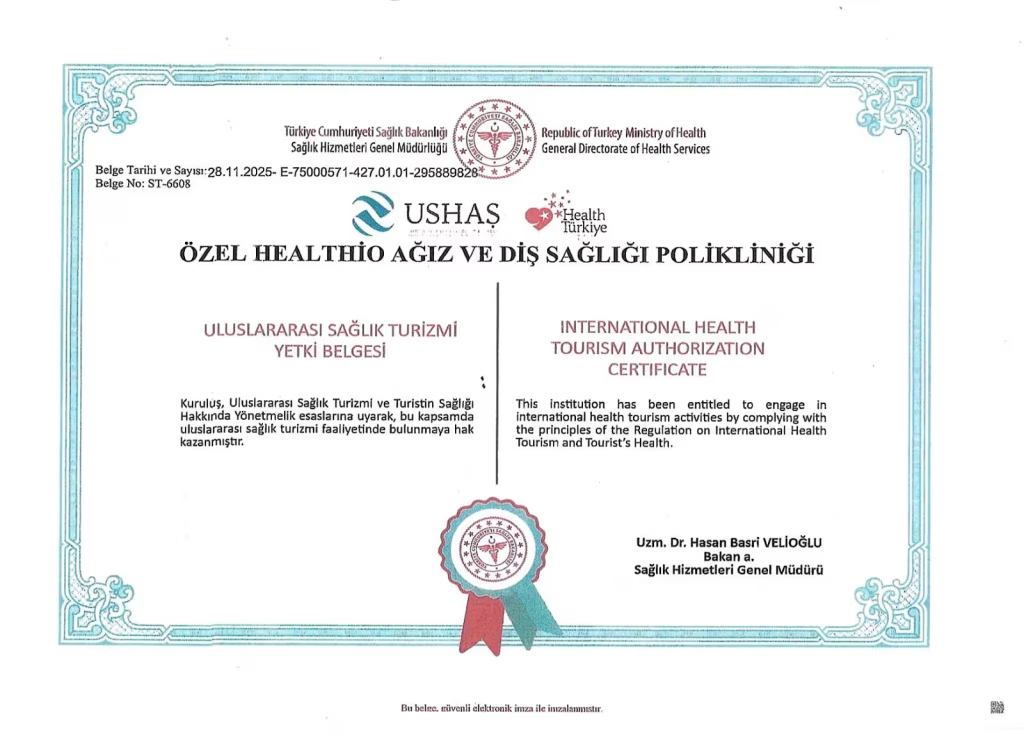
This is not a quality compromise. Turkey recorded over 500,000 international dental patients in 2024, with the Turkish dental tourism market reaching $400 million. The country operates under strict Ministry of Health regulations requiring an International Health Tourism Authorisation Certificate for all facilities serving international patients. Leading clinics are staffed by internationally trained, multilingual dentists using CAD/CAM technology, Digital Smile Design, and E.max or Zirconia porcelain — the same premium materials used in top clinics across Europe.
What a typical Turkey veneer package includes:
- Full consultation and digital smile design
- All dental appointments (preparation and bonding)
- Temporary veneers
- 4–7 nights’ hotel accommodation
- Airport and clinic transfers
- Aftercare guidance and follow-up contact
healthioturkey.com connects international patients with Turkey’s most trusted, accredited dental clinics — handling every detail from clinic selection and appointment scheduling to accommodation, so you can focus entirely on your smile transformation.
Contact healthioturkey.com for a free consultation and personalized treatment quote.
Porcelain Veneers Aftercare: How to Make Them Last
Caring for porcelain veneers is simpler than most patients expect — it closely mirrors standard oral hygiene with a few important additions.
Daily habits that protect your veneers:
- Brush at least twice daily with a non-abrasive fluoride toothpaste (avoid baking soda or charcoal-based products, which scratch the glaze)
- Floss daily, paying attention to the margin where the veneer meets the gumline
- Rinse with an alcohol-free mouthwash to protect both gums and bonding cement
Habits to avoid:
- Biting nails, chewing pen caps, or using teeth to open packaging
- Consuming excessive amounts of dark-pigmented drinks (coffee, red wine, cola) — drink through a straw when possible
- Skipping your night guard if you have any tendency to grind
Professional care:
- Schedule dental check-ups and cleanings every six months
- Inform your hygienist that you have porcelain veneers so they use appropriate instruments
- Your dentist will monitor veneer margins and gum health at each visit
With these habits in place, your investment in a veneer smile makeover will reward you with a decade or more of confident, effortless smiling.
Conclusion
Porcelain veneers deliver some of the most dramatic, lasting transformations in cosmetic dentistry — correcting discoloration, chips, gaps, and uneven sizing in a single treatment course. The clinical evidence is clear: a 95.5% ten-year survival rate means results that hold up as long as you care for them. And with Turkey offering the identical procedure and materials at 60–80% lower cost, the financial barrier that once kept veneers out of reach has largely disappeared.
The path to your before-and-after transformation starts with a consultation. Reach out to healthioturkey.com to get matched with an accredited clinic, receive a personalized cost estimate, and take the first step toward the smile you have been imagining.
Your new smile is five to seven days away.
FAQ
How long do porcelain veneers last?
Porcelain veneers typically last 10–15 years with proper care. Clinical studies confirm a 95.5% survival rate at 10 years, and many patients enjoy them for 20 years or more with good oral hygiene and regular dental visits.
Are porcelain veneers painful?
The procedure is performed under local anesthesia, so you feel no pain during treatment. Mild tooth sensitivity for a few days afterward is normal and resolves quickly. Most patients describe the experience as comparable to — or easier than — getting a standard filling.
How much do porcelain veneers cost in Turkey?
Porcelain veneers in Turkey cost between $150 and $300 per tooth — roughly 60–80% less than in the US or UK. All-inclusive packages covering treatment, accommodation, and transfers typically range from $2,400 to $4,800 for a full smile makeover of 16 veneers.
What is the difference between porcelain and composite veneers?
Porcelain veneers last 10–15 years, are highly stain-resistant, and produce the most natural-looking results. Composite veneers cost less but last only 5–7 years and are more prone to discoloration. For patients investing in a long-term smile transformation, porcelain is the superior choice.
Can veneers fix crooked or gapped teeth?
Yes. Veneers can close small gaps, correct minor misalignment, and even out uneven tooth sizing — giving the appearance of a straight, uniform smile without orthodontic treatment. For severe crowding or significant bite issues, your dentist may recommend orthodontics first.