Every year, more than 500,000 international patients travel to Turkey for dental treatment. A growing share of them arrive for one specific reason: a veneers Turkey package that delivers a complete smile transformation at 60–80% below Western prices — without any compromise on materials, technology, or clinical standards.
This guide covers everything you need to know before booking: exactly what the package includes, real per-tooth and full-set prices, a day-by-day trip itinerary, the Ministry of Health safety framework protecting international patients, and how to avoid the “Turkey teeth” trap that catches unprepared travelers.
What you will learn:
- What every legitimate veneers Turkey package should include
- Per-tooth and full-set prices across veneer types
- A day-by-day itinerary for your trip
- Turkey’s 2025 health tourism regulation updates
- The difference between veneers and crowns — and why it matters
- How to evaluate and choose the right clinic
Table of Contents
- What Does a Veneers Turkey Package Actually Include?
- Veneers Turkey Package Price: What You Pay Per Tooth and Per Set
- The 3 Types of Veneers Available in Turkey Packages
- Your Day-by-Day Turkey Veneers Trip Itinerary
- Is It Safe? Turkey’s 2025 Ministry of Health Regulations Explained
- “Turkey Teeth” Warning: Veneers vs. Crowns — Know the Difference
- How to Choose the Right Clinic for Your Veneers Package
- Planning Your Trip: Practical Logistics
- Aftercare at Home
- FAQ
What Does a Veneers Turkey Package Actually Include?
A reputable veneers Turkey package is an all-inclusive arrangement — not just a discounted treatment fee. When you receive a quote from a certified clinic, it should cover every element of your trip from arrival to departure.
A standard all-inclusive veneers Turkey package includes:
- Initial consultation and oral examination — clinical X-rays, gum health assessment, and suitability screening
- Digital Smile Design (DSD) — computer-generated preview of your new smile before any preparation begins
- All clinical appointments — tooth preparation session and final bonding session
- Temporary veneers — protective shells worn while your porcelain veneers are crafted in the laboratory (5–7 days)
- Final porcelain veneers — E.max, zirconia, or composite depending on your selected treatment
- Hotel accommodation — typically 4–7 nights in a partnered hotel near the clinic
- Airport and clinic transfers — private vehicle pickup and drop-off for all appointments
- Aftercare guidance and follow-up contact — written care instructions and a direct channel to the clinical team after you return home
What a package should not include — and a warning sign if it does — is pressure to add treatments you did not plan. A trustworthy clinic conducts your consultation first and presents a personalised plan. Any clinic that quotes a price before examining you should be questioned.
If you want to explore what a personalised treatment plan looks like for your smile, you can review the veneer treatments offered on healthioturkey.com or request a free consultation to receive a clinic-matched quote.
Veneers Turkey Package Price: What You Pay Per Tooth and Per Set
Turkey’s dental cost advantage stems from lower labour costs, government-supported health tourism infrastructure, and favourable currency exchange rates — not from cheaper materials or reduced clinical standards. Turkish clinics import the same E.max and zirconia ceramics used in London, New York, and Sydney.
Per-Tooth Prices in Turkey vs. UK/US
| Veneer Type | Turkey (per tooth) | UK (per tooth) | US (per tooth) |
|---|---|---|---|
| Composite | £100–£150 | £250–£600 | $300–$800 |
| E.max Porcelain | £225–£300 | £700–£1,200 | $900–$2,000 |
| Zirconia | £175–£250 | £600–£1,100 | $800–$2,000 |
Full-Set Package Prices (16–20 Veneers, All-Inclusive)
| Package | Turkey | UK | US |
|---|---|---|---|
| Composite veneers | £1,600–£3,000 | £5,000–£12,000 | $6,000–$16,000 |
| Porcelain veneers (E.max/zirconia) | £2,900–£4,500 | £12,000–£24,000 | $16,000–£40,000 |
Even after accounting for flights and spending money, most patients save between £8,000 and £20,000 on a full porcelain veneers turkey package compared to UK pricing.
Turkey’s dental tourism sector reached $184.3 million in 2024 and is projected to grow to $532 million by 2033 at a 12.5% compound annual growth rate, according to industry forecasting data. This growth trajectory reflects sustained international confidence — not a short-term trend.
The 3 Types of Veneers Available in Turkey Packages
Not every veneers turkey package uses the same material. Understanding the differences lets you select the right option for your clinical needs, aesthetic goals, and budget.
1. E.max Porcelain Veneers
E.max (lithium disilicate ceramic) is the premium standard for cosmetic dental veneers. The material replicates the light-reflecting translucency of natural enamel more closely than any alternative, producing results that are indistinguishable from natural teeth under all lighting conditions.
E.max veneers are 0.5–0.7 mm thick, requiring minimal enamel removal during preparation. A systematic review published in PMC, covering 6,500 veneers across 25 clinical studies, found a 10-year cumulative survival rate of 95.5% for feldspathic and pressed porcelain veneers. With proper care, E.max veneers routinely last 15–20 years.
Best for: Patients seeking the most natural-looking result, particularly for the front 6–10 visible teeth.
2. Zirconia Veneers
Zirconia veneers are manufactured from zirconium dioxide — a ceramic material known for exceptional strength. They are slightly more opaque than E.max, which can make them appear marginally less translucent on very thin teeth, but the aesthetic difference is minimal in most cases.
Zirconia is the preferred material for patients with bruxism (teeth grinding) or those requiring veneers on back teeth that endure stronger bite forces. Zirconia veneers cost slightly less per tooth than E.max in Turkey, making them a popular compromise between durability and price.
Best for: Patients who grind their teeth, require posterior veneers, or want maximum durability at a slightly lower price.
3. Composite Veneers
Composite veneers use tooth-coloured resin bonded directly to the tooth surface. Unlike porcelain, composite is applied and sculpted in a single appointment — there is no laboratory stage. This makes composite packages shorter (2–3 days rather than 5–7) and significantly cheaper.
The trade-off is durability. Composite veneers last 5–7 years on average versus 10–15 years for porcelain, and they are more susceptible to staining from coffee, tea, and wine. Composite is reversible — the resin can be removed without permanently altering the tooth — making it a good option for patients who want to try veneers before committing to porcelain.
Best for: Patients who want same-trip completion, a preview of their new smile, or a lower entry-level investment.
If you are unsure which material suits your case, a consultation with a healthioturkey.com-partnered clinic will assess your enamel thickness, bite, and lifestyle before recommending a type. You can also explore the Hollywood Smile treatment page for cases where a complete aesthetic redesign — combining veneers with additional procedures — may be the more appropriate approach.
Your Day-by-Day Turkey Veneers Trip Itinerary
A well-organised veneers Turkey package eliminates guesswork. Here is a typical schedule for porcelain veneers requiring a laboratory period:
Day 1 — Arrival Your clinic transfers you from the airport to your hotel. No clinical appointments are scheduled. This is a rest day to recover from travel, explore the city, and prepare for your consultation.
Day 2 — Consultation and Digital Smile Design Your dentist conducts a comprehensive examination including digital X-rays, intraoral scans, and gum health assessment. You discuss shade, shape, and length preferences during a Digital Smile Design session, where software generates a preview of your final result. If you are in good oral health and approved for treatment, tooth preparation is often scheduled the same day.
Day 2 or 3 — Tooth Preparation and Temporaries Under local anesthesia, your dentist removes approximately 0.5 mm of enamel from each tooth receiving a veneer. Precise impressions or digital scans go to the laboratory. Temporary veneers are fitted the same day, protecting your prepared teeth and giving you a functional preview smile.
Days 3–6 — Laboratory Period and Free Time Your custom porcelain shells are crafted in the laboratory. This period typically takes 5–7 working days. Most patients use this time to explore Istanbul, Antalya, or whichever city their clinic is based in — dining, sightseeing, and relaxing.
Day 6 or 7 — Final Bonding The laboratory delivers your completed veneers. Your dentist places each shell without adhesive first, checking fit, shade, and symmetry under natural and artificial light. Once you approve the result, each veneer is etched, primed, and bonded permanently using resin cement cured with a blue-light lamp. The entire session takes two to four hours for a full set.
Day 7 — Departure Your transfer returns you to the airport. You fly home with your completed smile.
For composite veneers, the entire trip compresses to 2–3 days — consultation, same-day sculpting, and departure.
Is It Safe? Turkey’s 2025 Ministry of Health Regulations Explained
Safety is the most common concern among patients considering a veneers turkey package for the first time. The concern is legitimate — and the regulatory answer is reassuring.
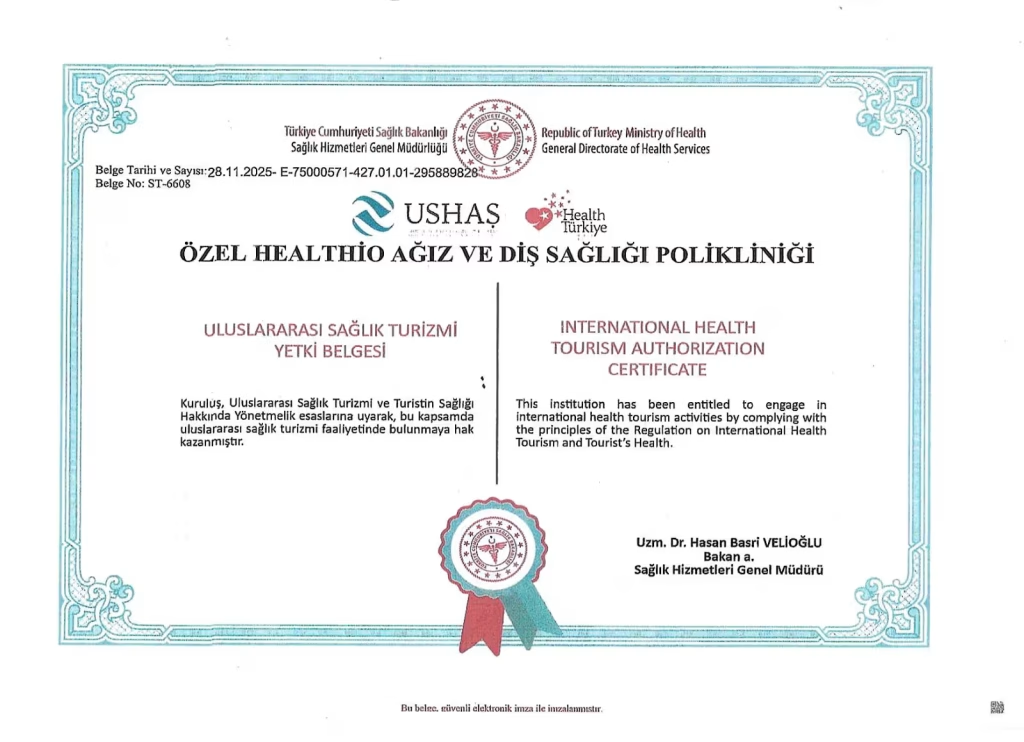
Turkey’s Ministry of Health (T.C. Sağlık Bakanlığı) operates a mandatory certification programme for all clinics serving international patients. Any facility legally permitted to treat foreign patients must hold an International Health Tourism Authorisation Certificate (Uluslararası Sağlık Turizmi Yetki Belgesi). This certificate requires clinics to demonstrate compliance with standards covering:
- Qualified and registered clinical staff
- Equipment sterilisation and infection control protocols
- Medical record-keeping and patient rights protections
- Minimum facility infrastructure standards
- Patient complaint and dispute resolution procedures
In April 2025, Turkey updated its health tourism regulatory framework through Official Gazette No. 32882 (published April 26, 2025), strengthening oversight of international patient facilities and tightening the certification renewal process. Clinics must now undergo more frequent inspections to retain authorisation.
The official list of certified clinics is published and maintained by the Ministry of Health on the HealthTurkiye portal — Turkey’s official health tourism authority. You can also verify whether a specific clinic holds current authorisation through the Ministry of Health’s authorised healthcare providers database.
Every clinic in the healthioturkey.com network holds this authorisation certificate. Verification takes less than five minutes on the Ministry’s database — and any reputable clinic will actively encourage you to check.
“Turkey Teeth” Warning: Veneers vs. Crowns — Know the Difference
“Turkey teeth” became a widely-used phrase in UK and US media following cases where patients returned home with aggressively ground-down, crowned teeth instead of the minimally-invasive veneers they expected. Understanding the distinction protects you.
A veneer is an ultra-thin ceramic shell bonded to the front surface of an existing tooth. Preparation involves removing approximately 0.5 mm of enamel — roughly the thickness of a contact lens. The underlying tooth structure remains largely intact.
A crown caps the entire tooth, requiring the removal of 2–3 mm of tooth structure on all sides. Crowns are clinically necessary when a tooth is severely damaged, has had root canal treatment, or needs full structural reconstruction. Applying crowns to healthy teeth purely for cosmetic reasons causes irreversible damage and is considered poor clinical practice.
The “Turkey teeth” phenomenon occurred when some clinics — operating without proper oversight — placed crowns on healthy teeth and marketed them as veneers. The result: patients returned with permanently damaged dentition requiring lifelong crown maintenance.
How to protect yourself:
- Confirm in writing that the procedure is veneers, not crowns, before any preparation begins
- Ask to see the enamel removal measurement — veneers require approximately 0.5 mm; crowns require 2+ mm
- Choose only clinics certified by Turkey’s Ministry of Health
- Avoid clinics that quote a price without first examining your teeth
A legitimate veneers Turkey package will always provide a written treatment plan specifying the procedure, material, and number of teeth before you commit. If this documentation is not offered voluntarily, ask for it. If the clinic declines, walk away.
For patients considering dental implants alongside their veneer treatment, the same principle applies: confirm the specific procedures in writing and verify the clinic’s certification status before treatment begins.
How to Choose the Right Clinic for Your Veneers Package
The right clinic shares several characteristics that distinguish it from the thousands of dental practices operating across Turkey.
Certification first. Confirm the clinic holds a current International Health Tourism Authorisation Certificate from the Ministry of Health. Cross-reference the certificate number against the Ministry’s online database.
Digital Smile Design capability. Any clinic performing cosmetic veneers at a high standard will offer DSD software. This tool allows your dentist to show you a digital preview of your result before touching your teeth — it is both a quality indicator and a protection against misaligned expectations.
Laboratory transparency. Ask which laboratory fabricates the veneers. Premium clinics use E.max and zirconia supplied by internationally accredited manufacturers. Clinics that cannot answer this question clearly should raise concern.
Before-and-after portfolio. Request case photos for patients with similar dental conditions to yours. A well-established clinic will have a portfolio covering discoloration, gaps, chipped teeth, and full-arch transformations.
Communication and aftercare. You will be returning home after treatment. The clinic must provide a clear, direct channel for post-treatment questions — a named contact rather than a generic email address.
Patient reviews on independent platforms. Check Google Maps, Trustpilot, and UK patient forums like Dental Implants Forum. Look for patterns across multiple reviews rather than isolated testimonials.
healthioturkey.com pre-screens its partner clinics against all of the above criteria before listing them. To get matched with a certified clinic and receive a personalised treatment quote at no cost, contact the healthioturkey.com team.
Planning Your Trip: Practical Logistics
Most international patients fly into Istanbul (IST or SAW), Antalya (AYT), or Izmir (ADB). Direct flights from London, Manchester, and major European cities are available daily, with flight times ranging from 3.5 to 4.5 hours.
When to book flights: Book after you have confirmed your treatment dates with the clinic, not before. Tooth preparation and laboratory timelines are fixed — your travel must accommodate the clinical schedule, not the other way around.
Travel insurance: Standard travel insurance policies cover cancellations and medical emergencies during your trip. Some specialist medical travel insurance providers offer additional cover for dental complications. Review your policy terms before departure.
Currency: Turkey uses the Turkish Lira (TRY). Most clinics accept payment in GBP, EUR, or USD at agreed rates. Confirm the payment currency and method (bank transfer, card, cash) before arriving.
What to bring: A list of any current medications, details of existing dental work including crowns or implants, and any X-rays taken within the last 12 months. Sharing recent X-rays in advance allows the clinic to conduct a preliminary assessment before your consultation appointment.
Accommodation: Package hotels are typically 3–4 star properties located within 10–20 minutes of the clinic. If you prefer a specific area or property category, confirm with the package coordinator before booking.
Aftercare at Home
Your veneers will arrive home with you — but the clinical team stays in Turkey. Following a clear aftercare protocol ensures your investment lasts its full 10–15 year lifespan.
Daily oral hygiene:
- Brush twice daily with a non-abrasive fluoride toothpaste — avoid charcoal and baking soda formulas, which scratch the glaze
- Floss daily, paying careful attention to the margin where each veneer meets the gumline
- Rinse with an alcohol-free mouthwash to protect both gums and bonding cement
Dietary adjustments in the first two weeks:
- Avoid very hard foods (crusty bread, raw carrots, hard sweets) while your bite settles
- Limit dark-pigmented drinks (coffee, red wine, cola) or drink them through a straw during the initial settling period
Long-term habits:
- If you clench or grind your teeth, wear a custom night guard — bruxism is the primary cause of premature veneer fracture
- Never use teeth as tools (opening packaging, biting nails, chewing pen caps)
- Schedule professional cleanings every six months and inform your hygienist that you have porcelain veneers so they use appropriate, non-abrasive instruments
If something feels wrong:
Contact the clinic directly through the aftercare channel they provide. Veneer issues detected early — a slightly high bite, minor edge chipping — are easily corrected. Problems left unaddressed for months are harder to fix.
Conclusion
A veneers Turkey package offers the same clinical outcome as treatment in London or New York at 60–80% lower cost — with the added benefit of an organised, all-inclusive experience that removes every logistical burden from your trip. The materials are identical, the technology is current, and the regulatory framework protecting you has strengthened in 2025.
The variables that determine your result are the clinic you choose, the veneer material that suits your case, and the aftercare habits you maintain afterward. Getting those three decisions right is what separates patients who return home with a smile they keep for 20 years from those who encounter problems.
healthioturkey.com exists to simplify the first decision. Every clinic in our network holds Ministry of Health certification, uses premium porcelain materials, and provides full aftercare support. Reach out to healthioturkey.com for a free consultation — receive your personalized treatment plan and cost estimate within 24 hours.
Your new smile is five to seven days away.
FAQ
How much does a veneers Turkey package cost?
A full veneers Turkey package covering 16–20 porcelain veneers, 4–7 nights’ accommodation, and all clinic transfers typically costs £2,900–£4,500. The same treatment in the UK runs £12,000–£24,000, and in the US $16,000–$40,000. Even after flights and spending money, most patients save between £8,000 and £18,000 by travelling to Turkey.
How long does the veneer treatment take in Turkey?
Porcelain veneers require two clinical visits separated by a 5–7 day laboratory period, so the total trip is 5–7 days. Composite veneers are completed in a single appointment, making the trip 2–3 days. Most patients travelling for porcelain veneers use the laboratory days to explore the city.
Is it safe to get veneers in Turkey?
Yes — when you choose a clinic certified by Turkey’s Ministry of Health. Certified facilities hold an International Health Tourism Authorisation Certificate, are subject to annual inspections, and are listed on the official HealthTürkiye portal. Choosing a certified clinic provides the same procedural and hygiene protections as a regulated clinic in the UK or EU.
What is the “Turkey teeth” warning?
“Turkey teeth” refers to cases where patients received aggressive crown preparations on healthy teeth rather than minimally invasive veneers. Veneers remove approximately 0.5 mm of enamel; crowns require 2–3 mm of removal on all tooth surfaces. Choosing a Ministry of Health-certified clinic that provides a written treatment plan before preparation eliminates this risk.
What does a veneers Turkey all-inclusive package include?
A standard all-inclusive package covers consultation, digital smile design, all clinical appointments (preparation and bonding), temporary veneers, final porcelain veneers, hotel accommodation (4–7 nights), airport and clinic transfers, and aftercare guidance. Flights are typically booked separately by the patient.