Medically reviewed by Alpaslan Burak Zorlu, dentist, M.Sc. Implantology and Dental Surgery · Last updated: October 2026 · Editorial contact: info@healthioturkey.com
Composite bonding in Turkey costs from £130 per tooth at our Antalya clinic (prices valid from October 2026), and a few teeth can usually be completed in one appointment. It is a conservative way to repair chips, close small gaps and reshape edges, but it needs upkeep and does not suit everyone.
This guide treats bonding as what it is: a low-intervention option with a running cost. It shows realistic chair time by number of teeth, the upkeep over ten years and the cases where we would advise against it.
Key points
- Composite bonding usually removes little or no enamel and can be repaired or removed later.
- Edge bonding and full composite veneers are different treatments with different lifespans.
- More teeth need more chair time; rushing layering and polishing shortens the life of the work.
- Whiten first, if at all: composite does not change colour with whitening.
- Bonding is the wrong choice with untreated decay or gum disease, heavy grinding or very dark teeth.
What Is Composite Bonding, and What Can It Fix?
Composite bonding is a treatment in which tooth-coloured resin is applied to the surface of a tooth, shaped by hand and hardened with a curing light. Because the resin is added rather than the tooth cut back, little or no enamel is usually removed in suitable cases.
It is used to fix:
- chipped or broken edges of front teeth;
- small gaps between teeth, including a gap between the two upper front teeth;
- uneven, worn or slightly short edges;
- small irregularities in shape or minor overlaps;
- some surface marks and mild discolouration that whitening does not remove.
Bonding is not designed to move teeth, rebuild heavily damaged teeth or change a whole smile from very dark to very white. Those situations usually need orthodontics, crowns or ceramic veneers. Suitability is confirmed only after an examination of your teeth, gums and bite.
Edge Bonding or Full Composite Veneers: What Is the Difference?
Edge bonding adds composite only where it is needed, for example along a chipped or worn edge, while a full composite veneer covers the whole front surface of the tooth. Edge bonding is quicker and keeps more natural enamel visible; a composite veneer changes colour and shape more but has a larger surface to stain, wear and polish.
| Edge bonding | Full composite veneer | |
|---|---|---|
| Area covered | Edge, corner or gap only | The whole visible surface |
| Price per tooth (GBP, valid from October 2026) | Composite bonding, from £130 | Quoted per tooth in the written treatment plan |
| Chair time per tooth | Shorter | Longer, because of layering and finishing |
| Typical lifespan | Often several years before a refresh; small areas are easy to repair | Often around 5 to 7 years before major refurbishment |
| Wear and staining | Limited to a small area; the natural enamel around it does not stain like resin | Larger resin surface that can dull and pick up stains |
| Colour change | Matches your existing shade | Can lighten or even out colour within limits |
Research on full composite veneers shows moderately high survival: a 2023 systematic review pooled a survival rate of 88% over follow-up periods of two to eight years, with surface roughness, colour mismatch and marginal staining as the most common complications, and directly placed veneers performing better than laboratory-made composite ones. If you are weighing composite against ceramic, our article on composite bonding vs veneers covers that decision in detail, and our guide to veneers in Turkey explains the ceramic options.
How Much Does Composite Bonding Cost in Turkey in 2026?
At our clinic in Antalya, composite bonding costs from £130 per tooth (GBP, valid from October 2026). In-office teeth whitening, if you want it before bonding, costs from £100 (GBP, valid from October 2026).
| Number of teeth | Composite bonding (from) | With in-office whitening (from) |
|---|---|---|
| 2 teeth | £260 | £360 |
| 6 teeth | £780 | £880 |
| 8 teeth | £1,040 | £1,140 |
| 10 teeth | £1,300 | £1,400 |
The figures above simply multiply the per-tooth starting price; they are not package offers. Whitening and bonding are rarely done on the same trip, for the reasons explained in the whitening section below.
What is included in the package price, and what is not
- Included in the package price: the online consultation and treatment plan from your panoramic X-ray; the in-clinic examination, 3D CBCT scan and digital X-rays; the treatment itself, all materials and laboratory work; a 4-star hotel with breakfast (3 to 7 nights depending on treatment); private transfers between airport, hotel and clinic for every appointment; an English-speaking patient coordinator; written warranty terms.
- Not included: flights (UK to Antalya return typically £80 to £200); travel insurance; food and personal expenses beyond hotel breakfast; and extra procedures only if the examination shows they are needed, such as hygiene treatment, fillings or root canal treatment, which are itemised separately in the written plan.
The final price is confirmed in writing after an examination and a CBCT scan. Before you pay a deposit, the written plan should state the number of teeth, the composite used, the appointments planned and what is and is not included. You can compare these prices with our other treatments on our price list for UK patients.
Questions to ask before you pay a deposit
When you compare composite bonding Turkey packages, the headline price per tooth tells you little on its own. Send the same questions to every clinic you are considering, including us, and compare the written answers:
- Do you hold the Ministry of Health International Health Tourism Authorisation Certificate, and may I see it?
- Who will treat me, and what are their qualifications and experience in cosmetic work?
- Which composite will be used, and is it named in the written plan?
- How many teeth do you recommend, and how long is each appointment scheduled for?
- Do I need hygiene treatment, fillings or gum treatment first, and how are they priced?
- What could change the price after I arrive?
- What do the written warranty terms cover, and how do I contact you about a problem from the UK?
- Could whitening or orthodontics achieve my goal with fewer bonded teeth?
The last question is the most revealing. A clinic that recommends fewer teeth, or a different treatment, when that is enough is putting your teeth ahead of the invoice.
How does this compare with the UK?
Under the NHS, treatment is provided when it is clinically necessary. If a front tooth is chipped or decayed, a white filling to repair it is part of Band 2, which costs £76.60 in England (NHS, checked October 2026); Scotland, Wales and Northern Ireland set their own charges. Bonding done purely to change how teeth look is normally private, and private fees vary from practice to practice. For a fair comparison, ask a UK dentist for a written private quote for the same number of teeth.
For one or two teeth, once flights and time off are counted, treatment with a dentist near home is often the more sensible choice, and we will say so if that applies to you.
How Many Teeth Can Be Done, and How Long in the Chair?
A few teeth can usually be bonded in a single appointment; larger cases are split over several sessions so that each tooth is layered, shaped and polished properly. As a rough guide, each tooth needs around 20 to 45 minutes depending on how much is being built up.
| Teeth | Approximate chair time | How we usually plan it | Days in Antalya |
|---|---|---|---|
| 1 to 2 | About 1 hour | One session | About 2 to 3 |
| 6 | About 2.5 to 3.5 hours | One long session or two shorter ones | About 3 to 4 |
| 10 | About 4 to 6 hours | Two sessions on separate days | About 4 to 5 |
| 20 | About 8 to 12 hours | Three or four sessions | About 5 to 7 |
Offers to bond 20 teeth in a single day deserve a direct question: how long is the appointment, and how much of it is spent on layering and polishing? Composite needs careful isolation from moisture, thin layers, curing between layers and several polishing steps. A systematic review of front-tooth composite restorations by Demarco and colleagues listed the time spent building up the restoration among the factors associated with failure, alongside the adhesive technique and the composite used.
Longer sessions are also tiring. Splitting a big case lets you rest, lets us check symmetry with fresh eyes and leaves a final day for adjustments.
What Happens on Treatment Day? Shade, Layering and Polishing
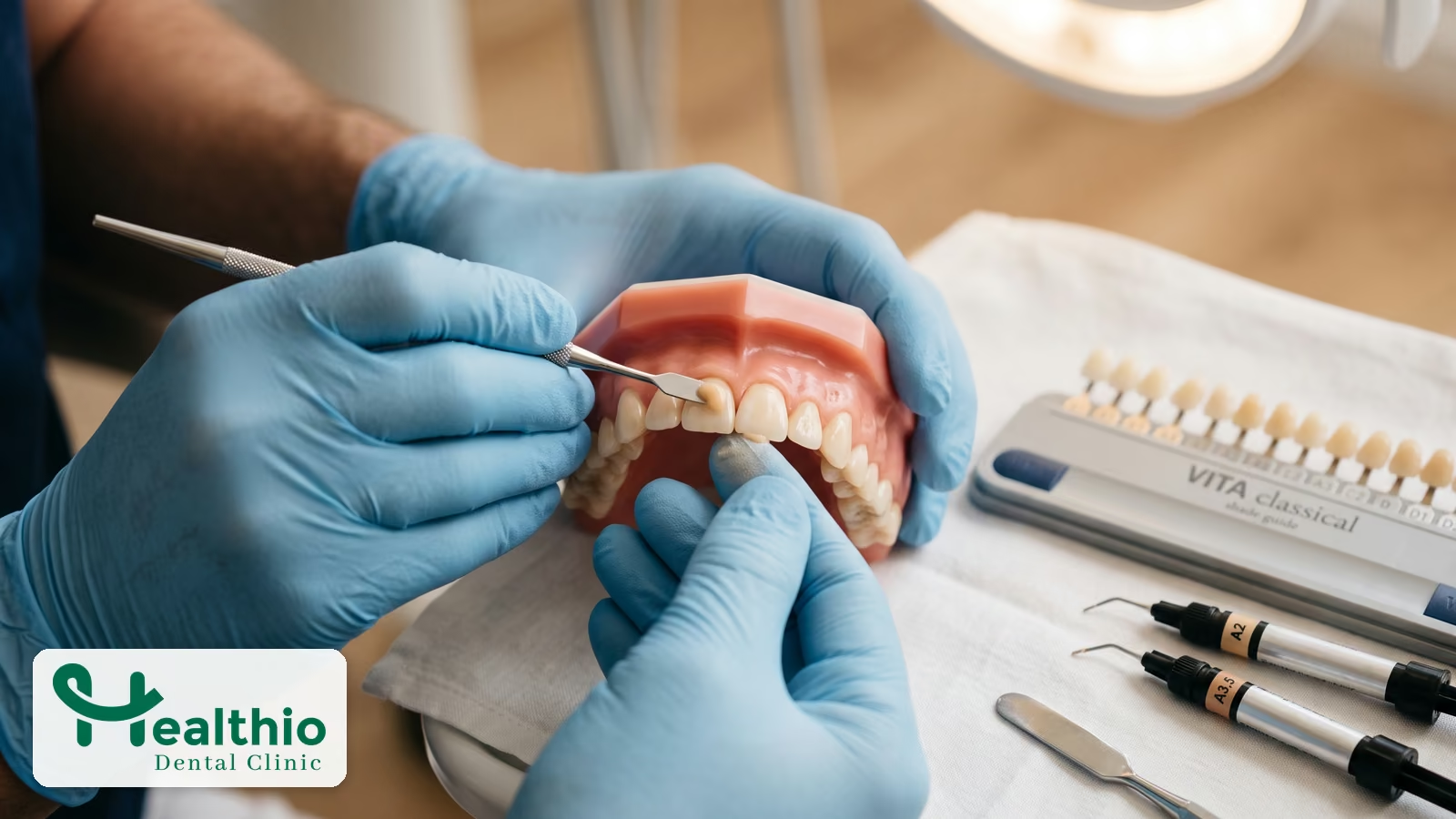
On treatment day the teeth are cleaned, the shade is chosen, the surface is prepared, and composite is built up in thin layers, hardened with a curing light, shaped and polished. Most people do not need a local anaesthetic because the enamel is usually not drilled.
- Check and clean: we confirm the plan against your examination and remove plaque and staining, because composite does not bond well to a dirty surface.
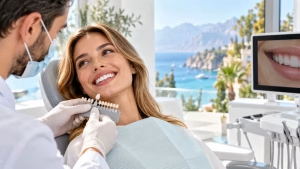
- Shade selection: the shade is chosen at the start, before the teeth dry out, because dehydrated teeth look temporarily lighter.
- Preview: where useful, a temporary mock-up shows the planned shape so you can comment before anything is bonded.
- Preparation: the tooth is isolated from moisture, the enamel is etched with a mild gel, rinsed, and a bonding agent applied.
- Layering: composite is placed in thin layers, often a more opaque inner shade and a more translucent outer one, each hardened with a curing light.
- Shaping and bite check: edges and contours are refined, and the bite checked so the bonding does not take heavy biting forces.
- Polishing: several polishing steps give the surface its shine and help it resist staining.
- Review: ideally the next day, after you have seen the result in different light, small adjustments are made.
Which composite is used, and does it matter?
We use nano-filled composites such as Filtek Supreme and Tokuyama Estelite, and the composite is named in your written plan. Material choice matters, but in both directions: a seven-year study of front-tooth build-ups found that nanofill composites were more prone to colour mismatch, while microhybrid composites more often chipped (Lempel and colleagues, 2017). Technique, polishing and your habits affect staining and shine at least as much as the brand.
Should You Whiten Your Teeth Before Bonding?
Yes, if you want lighter teeth at all, whiten before bonding. Whitening lightens natural enamel but not composite, so whitening after bonding leaves the bonded areas darker than the teeth around them, which usually means replacing the bonding.
- Composite does not whiten: the Oral Health Foundation notes that whitening does not work on fillings, crowns or veneers, and the same applies to bonding.
- Bonding straight after whitening is weaker: laboratory research shows that bond strength to freshly whitened enamel drops for a few days and then recovers (Miljkovic and colleagues, 2024).
- The shade needs to settle: teeth continue to change colour slightly after whitening, so we usually wait about two weeks before matching the composite shade.
For travelling patients, that leaves three realistic routes:
- Whiten with your UK dentist at least two weeks before you travel, then have bonding matched to the new shade in Antalya.
- Have in-office whitening with us on one trip and bonding on a later one.
- Skip whitening and have bonding matched to your current shade, accepting that whitening later is not an option.
In the UK, tooth whitening must be carried out by a registered dental professional, not a beauty salon. Whitening can cause temporary sensitivity and is not suitable for everyone, which is checked at the examination.
How Long Does Composite Bonding Last, and What Does Upkeep Cost Over Ten Years?
Composite bonding typically lasts around 5 to 7 years before it needs significant refurbishment or replacement, with regular polishing and occasional small repairs along the way. Many restorations last longer, and some need attention sooner, depending on your bite, habits and hygiene.
The evidence supports a long but variable life. Lempel and colleagues reported 88% survival of front-tooth composite build-ups at up to ten years, with an annual failure rate of 1.43%; chipping was most likely in the first year, and drinks such as tea, coffee and red wine were linked with discolouration. Demarco and colleagues found annual failure rates between 0% and 4.1% across studies, with fracture as the most common reason.
| Ten years, 8 teeth | When | Cost |
|---|---|---|
| Initial bonding | Year 0 | From £1,040 (8 x from £130), plus flights |
| Professional polish | About once a year | Usually done by your UK dentist or hygienist at their fees; not in our price list |
| Small chip repairs | As needed | Usually done locally at your UK dentist’s fees |
| Refurbishment or replacement | Around year 5 to 7 | From £1,040 again at today’s list price if done with us, plus flights; or a UK private quote |
| Treatment fees with us over ten years | From £2,080, plus flights for two trips and local upkeep |
This is an illustration, not a quote, and future prices may change. Daily habits make the largest difference to how long bonding looks good: rinsing after tea or coffee, not biting nails or hard objects, and wearing a night guard if you grind. Our composite bonding aftercare guide covers the first 48 hours and long-term care in detail.
When Is Composite Bonding the Wrong Choice?
Composite bonding is the wrong choice when the underlying problem is disease, bite or tooth position rather than surface shape, or when your expectations cannot be met by a thin layer of resin. In these situations we would advise a different treatment, or no treatment at all.
| Situation | Why bonding is a poor fit | What may suit better |
|---|---|---|
| Untreated decay or gum disease | Composite bonds poorly to unhealthy teeth and inflamed gums bleed into the work | Fillings and gum treatment first |
| Heavy grinding or an edge-to-edge bite | Thin composite edges chip and wear quickly | Bite assessment, a night guard, sometimes ceramic or orthodontics |
| Very dark or root-filled teeth | A thin layer of resin may not hide the colour | Whitening, or ceramic veneers or crowns |
| Marked crowding or rotated teeth | Building teeth out to look straight makes them bulky | Clear aligners first |
| Large old fillings or weakened teeth | Little sound enamel left to bond to | Onlays or crowns |
| A single chipped tooth | Bonding is appropriate, but a trip abroad rarely is | A dentist near home |
| Expecting very white, identical teeth for many years without upkeep | Composite dulls and stains with time | A frank discussion of ceramic options |
Bonding also carries its own risks: chipping, staining, a rough edge that traps plaque, or teeth that feel bulky if too much is added. The most reliable protection is honest case selection, which is why suitability is decided only after an examination of your teeth, gums and bite.
Frequently asked questions
How much is composite bonding in Turkey per tooth?
At our clinic, composite bonding costs from £130 per tooth (GBP, valid from October 2026). The package price includes the examination, scan, hotel with breakfast and transfers; flights, travel insurance and any extra treatment the examination shows is needed are not included. Your final price is set in the written plan.
Do they shave your teeth for composite bonding?
Usually not. In suitable cases, little or no enamel is removed: the surface is cleaned and lightly etched so the resin can bond. Occasionally a sharp edge is smoothed or an old filling removed. If a plan involves reducing healthy teeth substantially, ask why, because that is no longer conservative bonding.
How many days do I need in Antalya for composite bonding?
For a few teeth, about two to three days is usually enough: examination on arrival, bonding, then a review. Six to ten teeth usually need three to five days, and around twenty teeth five to seven days, because the work is split into sessions. Your written plan gives the number of days.
Can composite bonding be removed later?
Yes. Because bonding usually sits on largely intact enamel, it can be polished off or replaced, and you can later choose veneers or other treatment. Removal must be done carefully by a dentist to avoid taking enamel with it, and the tooth surface may need polishing afterwards.
Does composite bonding stain?
It can. Composite is more porous than enamel and ceramic, so tea, coffee, red wine, curry and smoking can discolour it over time, especially at the edges. A good final polish, rinsing after staining drinks and a professional polish about once a year help keep it looking fresh.
Can I have composite bonding if I grind my teeth?
Sometimes, but grinding is one of the main reasons bonding chips early. We assess wear, bite and jaw muscles first. Mild grinders may be suitable if they wear a night guard; heavy grinding or an edge-to-edge bite usually needs the bite addressed first, and bonding may not be advisable.
Summary
Composite bonding in Turkey is a conservative way to repair chips, gaps and uneven edges, from £130 per tooth at our clinic. Plan for enough chair time, whiten first if you want to, budget for polishing and an eventual refresh, and accept that bonding is not right for every mouth.
If you would like to know whether it suits you, send your photos or X-rays for an assessment and a written treatment plan.
Plan your treatment with Healthio Turkey
Send us your X-rays or a few photos of your teeth. Our dentists in Antalya review them and send you a written treatment plan with the price. Whether a treatment suits you is confirmed at your examination.
Sources
- NHS. How much NHS dental treatment costs. 2025. nhs.uk
- Oral Health Foundation. Tooth whitening. 2026. dentalhealth.org
- Dental Materials (Demarco FF et al.). Anterior composite restorations: A systematic review on long-term survival and reasons for failure. 2015. pubmed.ncbi.nlm.nih.gov
- Dental Materials (Lempel E et al.). Direct resin composite restorations for fractured maxillary teeth and diastema closure: A 7 years retrospective evaluation of survival and influencing factors. 2017. pubmed.ncbi.nlm.nih.gov
- Journal of Evidence-Based Dental Practice (Lim TW et al.). Survival and complication rates of resin composite laminate veneers: A systematic review and meta-analysis. 2023. pubmed.ncbi.nlm.nih.gov
- Microscopy Research and Technique (Miljkovic M et al.). Bleaching effect on bonding performance of composite to enamel. 2024. pubmed.ncbi.nlm.nih.gov