Written and clinically reviewed by Dr. Alpaslan Burak Zorlu, Healthio Dental Clinic, Antalya. Published 3 August 2026.
In Short
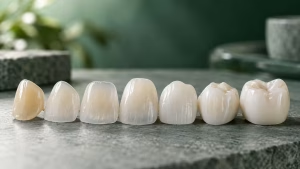
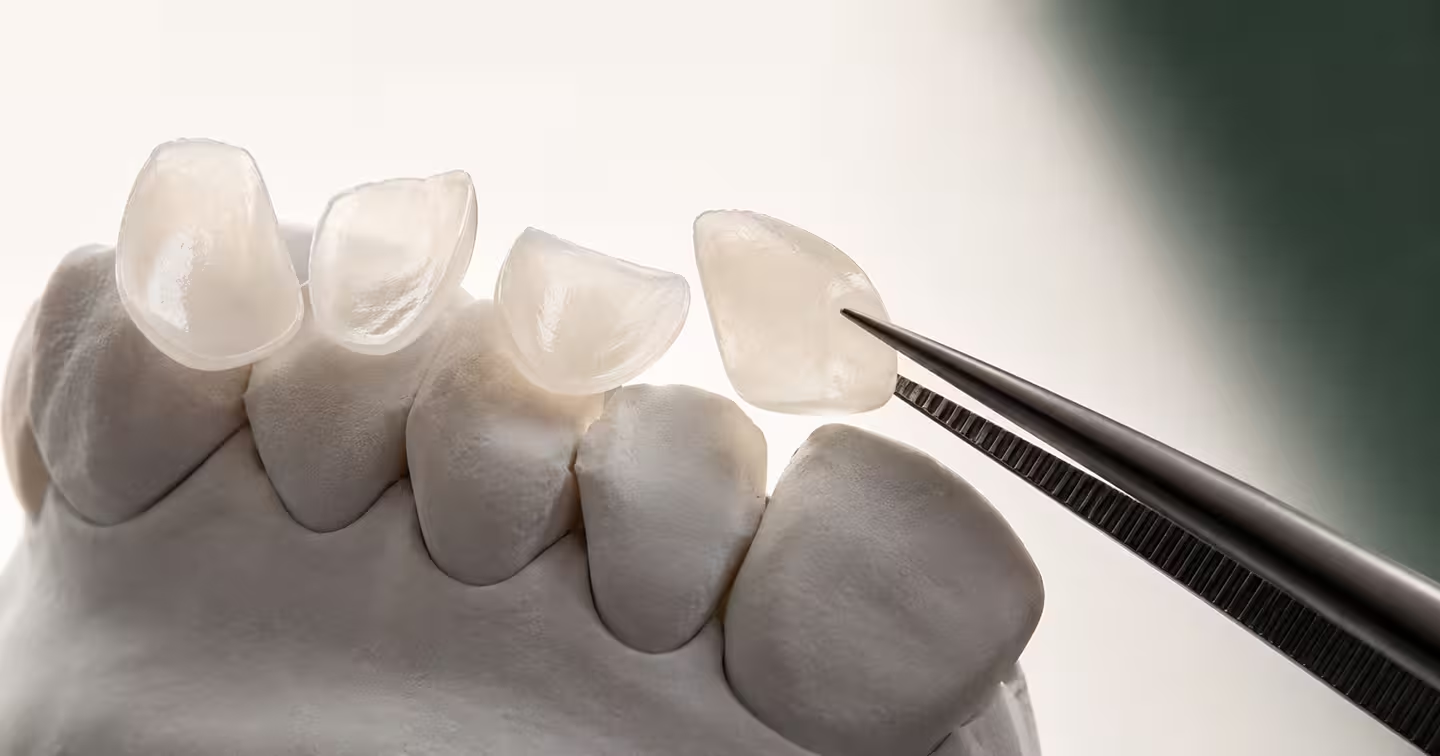
E-max is a material, not a procedure. It is a lithium disilicate glass-ceramic, pressed or milled as a single block, used to make thin shells bonded to the front of a tooth.
A laminate veneer preparation removes roughly 0.3–0.7 mm of enamel from the facing surface. A crown reduces the tooth on every side. These are not the same treatment — and the difference is what separates a veneer case from the stories you have read.
The question to ask any clinic: “Am I being offered veneers or crowns, and how much of each tooth is being removed?” A clinic that cannot answer that in writing, before you travel, has not planned your case.
On This Page
02E-max vs Zirconia vs Composite
03How Much Tooth Is Removed
04Who E-max Suits — and Who It Doesn’t
05Your Treatment Week in Antalya
06How Long They Last
07What Determines the Price
08Frequently Asked Questions
What E-max Actually Is
E-max is a brand name, not a treatment. The material behind it is lithium disilicate, a glass-ceramic that is either pressed from an ingot or milled from a solid block, then finished and glazed by a ceramist. What matters clinically is that the restoration is made from one homogeneous block rather than built up in layers of porcelain over a metal or ceramic core.
That single-block structure is why the material behaves the way it does. Layered restorations fail at the interface between the core and the veneering porcelain — the outer layer chips away from the substructure. A monolithic lithium disilicate restoration has no such interface. It also transmits light through its full thickness, which is what allows a well-made veneer to pick up colour from the tooth behind it instead of sitting on the face like a flat white tile.
The trade-off in one sentence: lithium disilicate buys you translucency at the cost of raw strength. Its flexural strength sits in the region of 360–400 MPa, against roughly 900–1200 MPa for zirconia. On front teeth, where the load is low and the aesthetic demand is high, that trade is worth making. On molars, on bridges, or in a mouth that grinds heavily, it usually is not.
One thing that gets lost in the marketing
Lithium disilicate is bonded, not cemented. Zirconia is hard enough to be held in place mechanically; an E-max veneer relies on a chemical bond between the etched ceramic, the resin cement and — critically — your enamel. Bond strength to enamel is substantially higher and more durable than bond strength to dentine. This single fact drives most of what follows on this page: how much tooth can be removed, who is a candidate, and how long the result lasts.
E-max vs Zirconia vs Composite
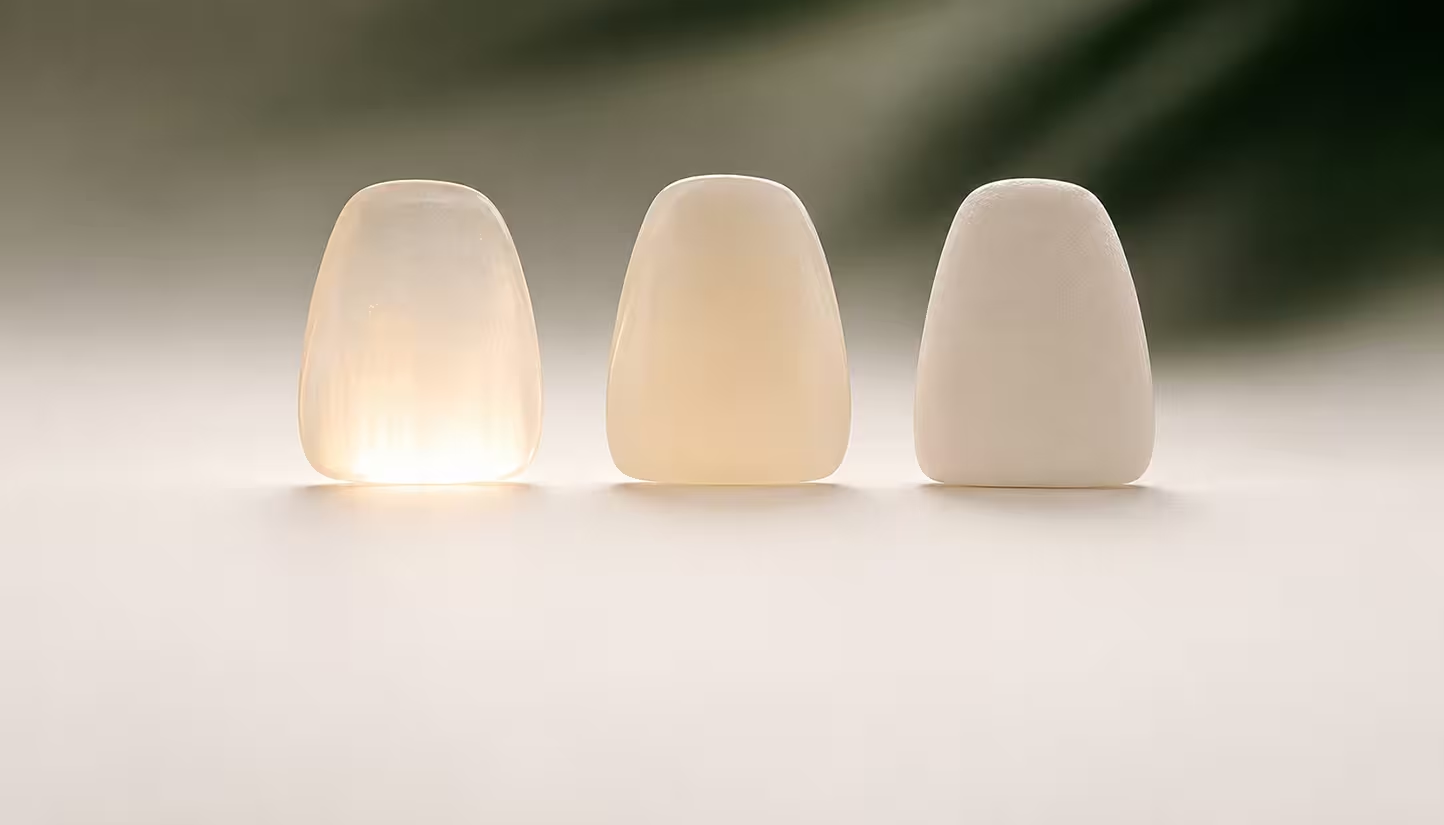
Most comparison pages declare a winner. There isn’t one. These are three materials chosen for three different situations, and a clinic that offers you only one of them is describing its own workflow rather than your case.
Mixed cases are normal. It is common and entirely appropriate to place E-max veneers on the front teeth and zirconia crowns further back in the same mouth, where the load is higher and nobody sees the difference in translucency. If a treatment plan uses one material for all twenty visible teeth without explaining why, that is a workflow decision rather than a clinical one. → Dental crowns · Composite bonding
How Much Tooth Is Removed
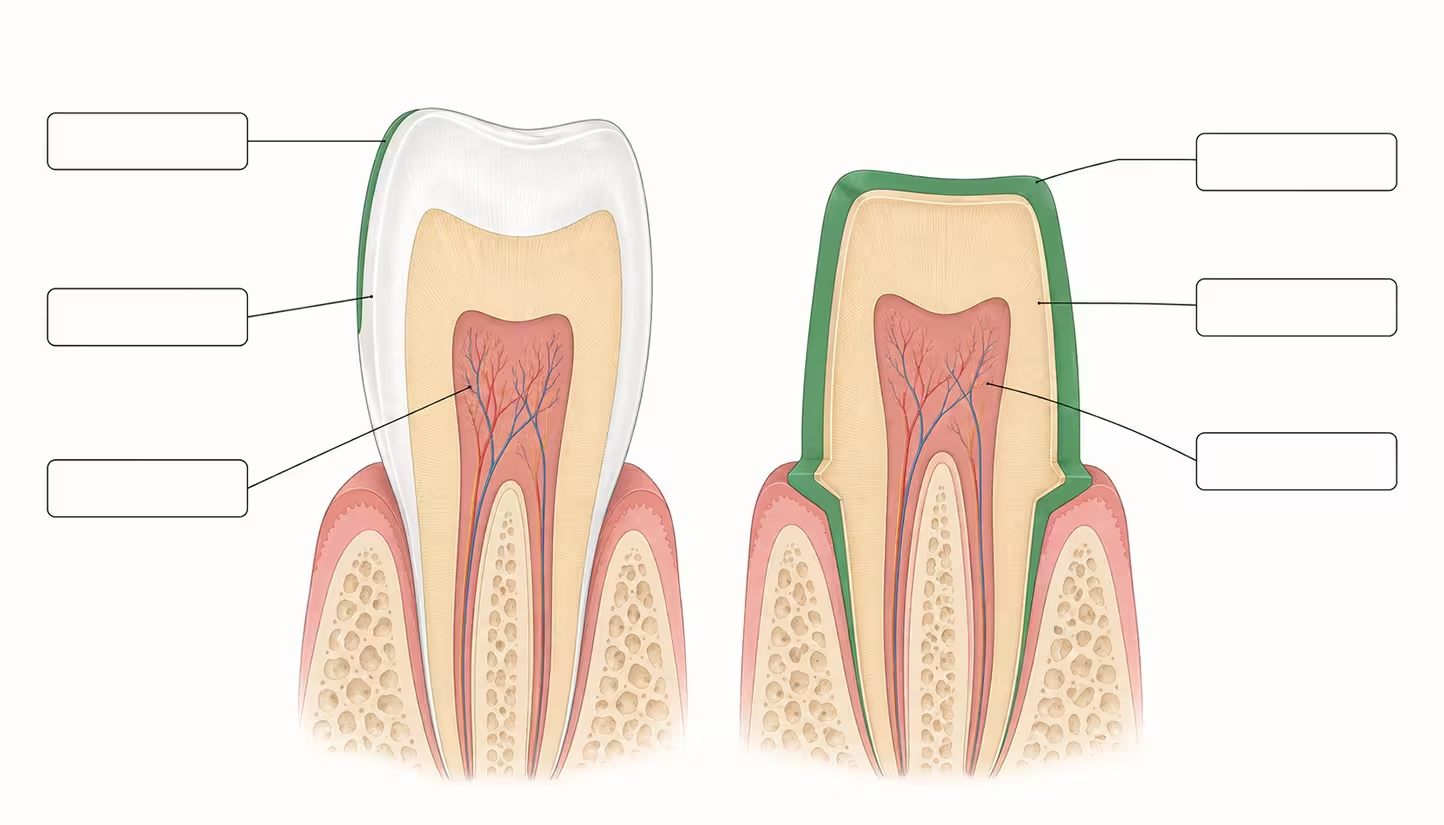
This is the section most clinic pages skip, and it is the one you came for. British readers have spent three years looking at photographs of teeth filed to points. So let us be specific about what a veneer preparation is and what it is not.
Both procedures have legitimate uses. A crown is the correct answer for a tooth that is broken down, root-filled, or carrying a large old filling — there is not enough sound structure left for a veneer to bond to. A crown is not the correct answer for a healthy, well-positioned front tooth that the patient simply wants to look whiter.
Why “Turkey teeth” became a phrase
The cases behind the headlines were, overwhelmingly, crowns fitted to healthy teeth — often twenty of them, often prepared and fitted inside a few days, often on patients who believed they were getting veneers. Some of those teeth later needed root canal treatment. The failure was not the ceramic. It was a treatment plan that removed far more tooth than the patient’s problem required, on a timetable that left no room to reconsider. → What really happens when Turkey teeth go wrong
Three questions to put to any clinic in writing, before you book a flight
1. Is each tooth in my plan receiving a veneer or a crown? Ask tooth by tooth, not as a total.
2. For any tooth marked as a crown, what is the clinical reason a veneer will not work?
3. Will I see a trial fitting before anything is permanently bonded?
Who E-max Suits — and Who It Doesn’t
Good candidate
Front teeth that are healthy but discoloured, worn at the edges, slightly chipped or mildly uneven in shape.
Small gaps or minor rotations where full orthodontics is not wanted.
Plenty of remaining enamel to bond to, and gums that are healthy.
Treat something else first
Active decay or gum disease. Ceramic bonded over untreated disease fails, and the gum line recedes away from the margin.
Significant crowding or a bite problem. Correct the position with aligners first, then veneer the shape. → Aligners
Untreated grinding. Bruxism must be managed, usually with a night guard, or the ceramic fractures. → Bruxism
Different material needed
Very dark or tetracycline-stained teeth. Translucency works against you here; the darkness shows through unless more thickness or a more opaque material is used.
Little enamel left. Heavily filled or previously crowned teeth cannot support a reliable bond.
Bridges and back teeth. Load and span push the case towards zirconia.
Whitening comes first, not last. A ceramic veneer’s shade is fixed the moment it is made and will never respond to whitening gel. So the natural teeth that will sit alongside your veneers — and the teeth further back that show when you laugh — are whitened before the final shade is selected. Get this order wrong and your own teeth will drift lighter or darker than the ceramic, which is the most common reason a technically good case still looks wrong in photographs. → Teeth whitening
Your Treatment Week in Antalya
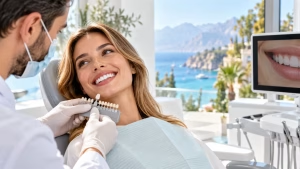
A front-teeth veneer case is normally completed in five to seven days. The schedule below is the standard sequence. What matters is not the speed but the presence of the try-in stage — that is the appointment where a case can still be changed.
If a schedule has no try-in, ask why. Three-day smile packages exist because they fit a flight pattern, not because ceramic work is better when it is rushed. Removing the try-in stage removes the only point at which a case can be corrected before it becomes permanent. That single omission accounts for a large share of the results people later regret.
How Long They Last
Published follow-up of bonded lithium disilicate veneers reports survival in the region of 95% at ten years, and a realistic working expectation is ten to fifteen years. But the ceramic is rarely the variable that decides the outcome. Four other things are:
1. What it is bonded to
Enamel gives a far more durable bond than dentine. Conservative preparation is not only kinder to the tooth — it produces a longer-lasting restoration.
2. Grinding
Untreated bruxism is the single most common cause of early fracture. A night guard is not an upsell; for a grinder it is part of the restoration.
3. Gum health
Veneers do not fail from the biting edge downwards; they fail at the margin. Receding gums expose the bond line and it darkens. Hygiene appointments protect the result.
4. Habits
Biting nails, chewing pens, opening packaging and cracking ice with the front teeth. Ceramic tolerates chewing well and point loading badly.
What Determines the Price
We do not publish a per-tooth figure, because a number quoted before an examination is a guess and the two most expensive variables in any veneer case are invisible until someone looks in your mouth. Here is what actually moves the quote, so you can read anyone’s proposal properly:
1. How many teeth genuinely need treating. Packages are usually quoted for sixteen or twenty units. Many people need eight or ten. Paying for a fixed package means paying to prepare teeth that did not need preparing.
2. Preliminary treatment. Gum treatment, replacing failing old fillings, root canal work or whitening all sit ahead of the veneers. A quote that omits them is not cheaper; it is incomplete.
3. Veneers or crowns. Different procedures, different laboratory work, different cost. This is also why the tooth-by-tooth breakdown in section 03 matters financially as well as clinically.
4. Laboratory technique. A monolithic pressed veneer and a hand-layered, individually characterised one are not the same product, take different amounts of a ceramist’s time, and do not photograph the same.
5. Chair time. A case with a proper try-in stage and unhurried bonding occupies more appointments than a three-day turnaround. That difference is real and it is where quality lives.
Comparing quotes fairly. Put any two proposals side by side and check three lines: the number of units, the veneer-versus-crown split, and whether preliminary treatment is itemised. A quote that is materially cheaper is almost always cheaper on one of those three, not on the ceramic. Send us your photographs and we will tell you which teeth we think need work — including the ones we would leave alone.
Get a tooth-by-tooth plan before you book anything
Send photographs and any recent X-rays. You will receive a written plan that states which teeth are proposed for veneers, which for crowns, and the reason for each.
Frequently Asked Questions
What are E-max veneers?
E-max is the brand name of a lithium disilicate glass-ceramic used to make thin ceramic shells that are bonded to the front surface of a tooth. The material is pressed or milled as a single block rather than layered by hand, which is why it combines reasonable strength with the translucency that makes a restoration read as a natural tooth rather than a flat white plate.
How much of my tooth is removed for E-max veneers?
A conventional laminate veneer preparation removes roughly 0.3 to 0.7 mm from the front surface of the tooth, and in favourable cases a minimal preparation approach removes even less. This is a fraction of what a crown requires. A crown preparation reduces the tooth on every surface and removes a substantial part of the visible tooth structure. If a clinic proposes crowns on healthy, well-aligned front teeth purely for appearance, ask why a veneer is not suitable in your case.
E-max or zirconia, which is better?
Neither is better in general; they are chosen for different jobs. Lithium disilicate has a flexural strength in the region of 360 to 400 MPa and high translucency, which makes it the stronger aesthetic choice for front teeth. Zirconia is considerably harder, roughly 900 to 1200 MPa depending on the generation, which makes it the more appropriate choice for back teeth, bridges and patients with heavy grinding forces. Zirconia is also more opaque, so it is useful for masking a severely discoloured tooth underneath.
How long do E-max veneers last?
Published clinical follow-up of bonded lithium disilicate veneers reports survival around 95 percent at ten years, and a realistic expectation in practice is ten to fifteen years. Longevity depends far more on the bond and the patient than on the ceramic. Veneers bonded to enamel outlast veneers bonded largely to dentine, and untreated grinding, nail biting, opening packaging with the front teeth and neglected gum health are what shorten the lifespan.
What are the pros and cons of E-max veneers?
The advantages are conservative preparation, translucency close to natural enamel, a surface that does not discolour the way composite does, and good gum tolerance. The limitations are that the material is not strong enough for long bridges or heavy grinding without protection, it needs enough enamel to bond to reliably, it cannot mask a very dark underlying tooth without additional thickness, and the shade is fixed once bonded, so it cannot be whitened later.
Are E-max veneers the same as “Turkey teeth”?
No, and the distinction is the whole point. The cases that produced the Turkey teeth headlines were overwhelmingly full crowns fitted to healthy teeth that had been reduced to pegs, often on a compressed schedule and often ending in root canal treatment. A laminate veneer is a different procedure with a different amount of tooth removal. The material is not what went wrong in those cases; the treatment plan was.
Who is not suitable for E-max veneers?
Veneers are postponed or ruled out where there is untreated decay or active gum disease, where too little enamel remains for a reliable bond, where existing fillings occupy most of the tooth, and in severe untreated bruxism. Significant crowding or a bite problem should be corrected orthodontically first rather than disguised with ceramic, because ceramic placed on top of an untreated bite problem fails early.
How long does E-max veneer treatment take in Antalya?
Plan on five to seven days in Antalya for a front-teeth veneer case. The first visit covers examination, imaging, shade selection and smile design. Preparation and impressions follow, with temporaries fitted the same day. The laboratory then fabricates the restorations, a try-in appointment checks shape and shade before anything is bonded, and final bonding and a bite check complete the treatment. Cases needing gum treatment or whitening beforehand take longer.
Can E-max veneers be whitened later?
No. The shade of a ceramic veneer is fixed when it is made and does not respond to whitening agents. This is why any whitening of your remaining natural teeth is carried out before the final shade is chosen. If the natural teeth are whitened afterwards, they will no longer match the veneers.
Do E-max veneers stain?
The glazed ceramic surface itself resists staining far better than composite bonding, so coffee, tea, red wine and tobacco do not discolour it in the same way. What can discolour over time is the margin where the veneer meets the tooth, particularly if the bond line is exposed or oral hygiene is poor. Regular professional cleaning keeps the margins clean.
What determines the price of E-max veneers in Turkey?
Five things move the quote: how many teeth are actually being treated, whether preliminary work such as gum treatment, whitening or replacing old fillings is needed, whether the case is a straightforward veneer or requires crowns and other restorations, the laboratory technique and whether the ceramist is layering the restorations individually, and the amount of chairside time the case needs. A quote that arrives before an examination is a guess, not a treatment plan.
Can E-max veneers be removed or replaced?
A bonded veneer cannot simply be lifted off, because the ceramic and the tooth are joined adhesively. Removal means carefully cutting the ceramic away, and the tooth underneath remains prepared. It can be restored with a new veneer, but it does not return to its original state. This is why the decision to prepare a tooth is treated as permanent even though the restoration itself is replaceable.
Antalya, Turkey
The plan comes before the flight
Send photographs and any recent radiographs and you will receive a written plan setting out which teeth are proposed for veneers, which for crowns, and the clinical reason in each case. If veneers are not the right answer for your teeth, we will tell you that too. Every case includes a try-in appointment before anything is permanently bonded.
Filo Apartmanı, Fener, Tekelioğlu Cd. No:51/B, 07160 Muratpaşa / Antalya
Related Treatments
Before You Travel — Read Independently
Turkey Teeth Gone Wrong: What Really Happens
General Dental Council — UK register

Written and clinically reviewed by
Dr. Alpaslan Burak Zorlu
Dentist at Healthio Dental Clinic in Antalya. He obtained his training in Germany and works principally in implantology and restorative dentistry, treating patients travelling from the United Kingdom, Germany, Ireland and across Europe. See the clinical team →
Published 3 August 2026 • Last clinical review 3 August 2026.
Important
This page is general information and does not replace a clinical examination. Whether E-max veneers are appropriate for you, how many teeth are involved and how much preparation is required can only be determined after an in-person assessment including radiographs. Results vary between patients and no dental treatment can be guaranteed. Figures given for material strength, preparation thickness and lifespan are typical published values, not promises about an individual case. Preparing a tooth for a veneer is irreversible; discuss this with your own dentist before committing to treatment abroad.