Written and clinically reviewed by the Healthio dental team, Antalya. Published: 3 September 2026.
In short
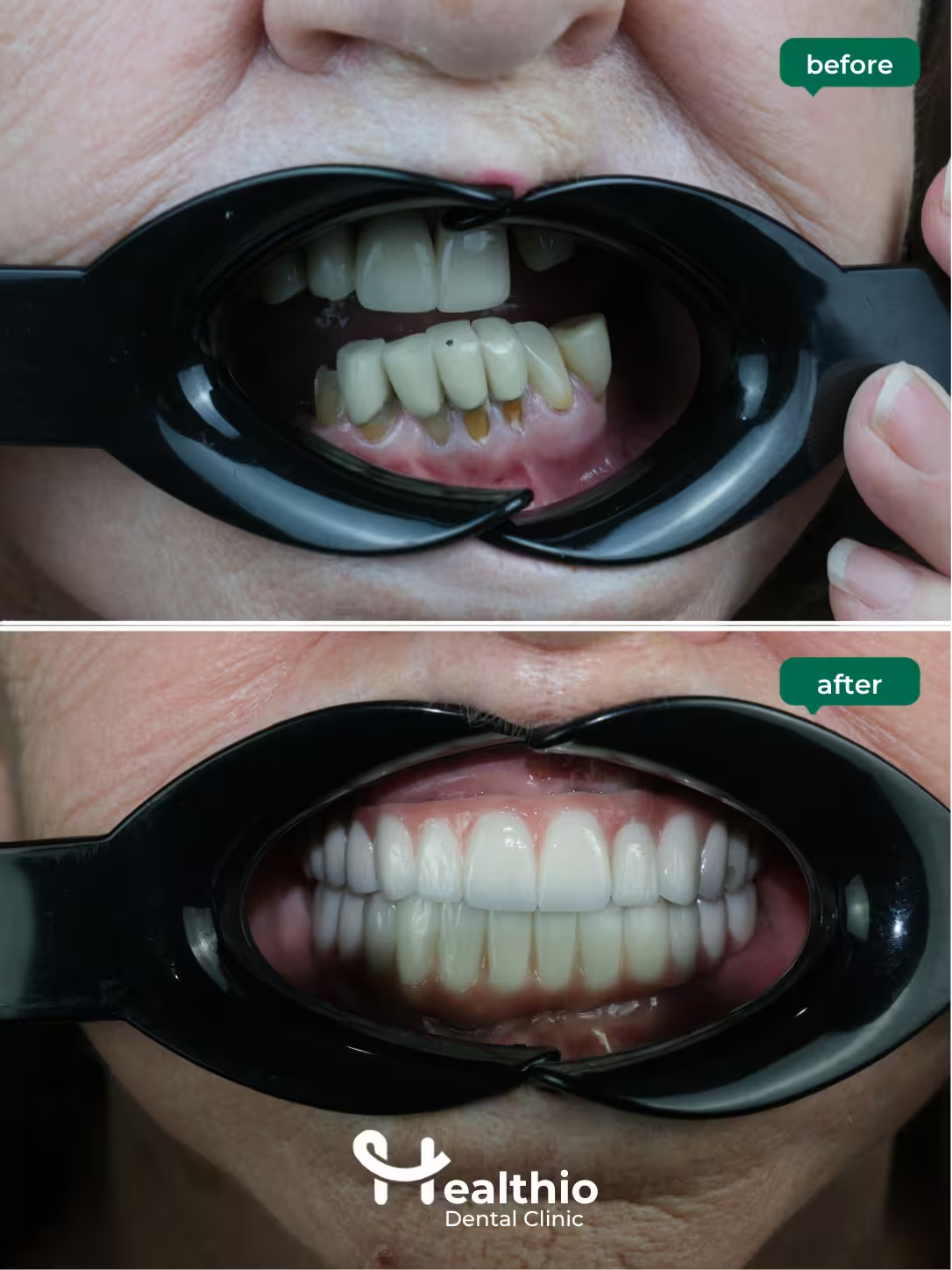
"Turkey teeth" and dental implants are not the same treatment. "Turkey teeth" is the nickname British patients gave to crowns and veneers fitted over existing teeth that have been filed down. An implant replaces a tooth that is already missing — a titanium post placed in the jawbone, topped with a crown months later.
If you still have your natural teeth and dislike how they look, you are looking at crowns or veneers. If you have gaps, failing roots or wear a denture, you are looking at implants. The two have different timelines, different prices and different consequences if they go wrong.
The question worth asking every clinic: "Is this quote for one arch or both, how many implants does it include, which implant system, which final bridge material, and what happens to the price if the CT scan shows too little bone?" A quote that does not answer those five questions in writing is not a quote — it is an advert.
On this page
Turkey teeth vs implants — the actual difference
The phrase came out of British social media, not out of dentistry. From around 2021, UK patients returning from Turkey with a bright, uniform smile were described as having "Turkey teeth" — and the label stuck to every kind of dental work done in the country, implants included.
That is where the confusion starts, and it matters, because the two treatments answer completely different problems. Most of what people call Turkey teeth is cosmetic work on teeth that are still there. Implants are restorative surgery for teeth that have already been lost.
The distinction is financial as well as clinical. Filing down eight healthy front teeth to fix discolouration cannot be undone. If those teeth are lost later, you end up needing implants anyway — after already paying for crowns. Any clinic proposing to remove or prepare sound teeth for cosmetic reasons deserves a second opinion before you book a flight.
What the price is actually made of
An implant is not one product. It is a sequence of procedures spread over several months, and every item on that list has its own cost — which also means every item can be quietly left out to make a headline figure look better. A quote you can compare is one that shows all of them.
The trap in the word "from"
A "from" price describes the cheapest possible scenario: fewest implants, cheapest system, simplest bridge, no bone work. That combination is uncommon, because someone who has lost teeth has usually lost some ridge bone with them. It is not dishonest — it is the bottom of a range. The problem starts when a patient budgets against that number and only learns the difference after the scan, already abroad.
Get your starting price
Choose your treatment below to see where a quote begins in Antalya, next to where the same work begins privately in the UK. These are starting prices, not an offer — your own figure is confirmed in writing after a CBCT scan.
Build your quote Starting prices
1 — What do you need?
2 — How many implants?
2 — How many arches?
3 — Implant system
4 — Anything else likely needed?
Antalya, starts from
£550
UK private, starts from
£2,000
Typical saving from
£1,450
2 trips · 3–5 days each · 3–6 months apart · Starting price covers the implant, abutment and zirconia crown, CBCT scan, airport transfers and hotel nights during treatment.
These are starting prices, not a quote or a fixed offer. They are based on 2026 Antalya pricing and typical UK private fees, and are the point a written quote begins from — the final figure is confirmed after a CBCT scan and depends on bone volume, the number of units and any grafting. Currency conversions are indicative.
Single implants, All-on-4 or All-on-6
The number in the name is the number of implants carrying one bridge. Choosing between them is not choosing from a price list — it depends on how much bone is left and how it is distributed, which only a CBCT scan shows.
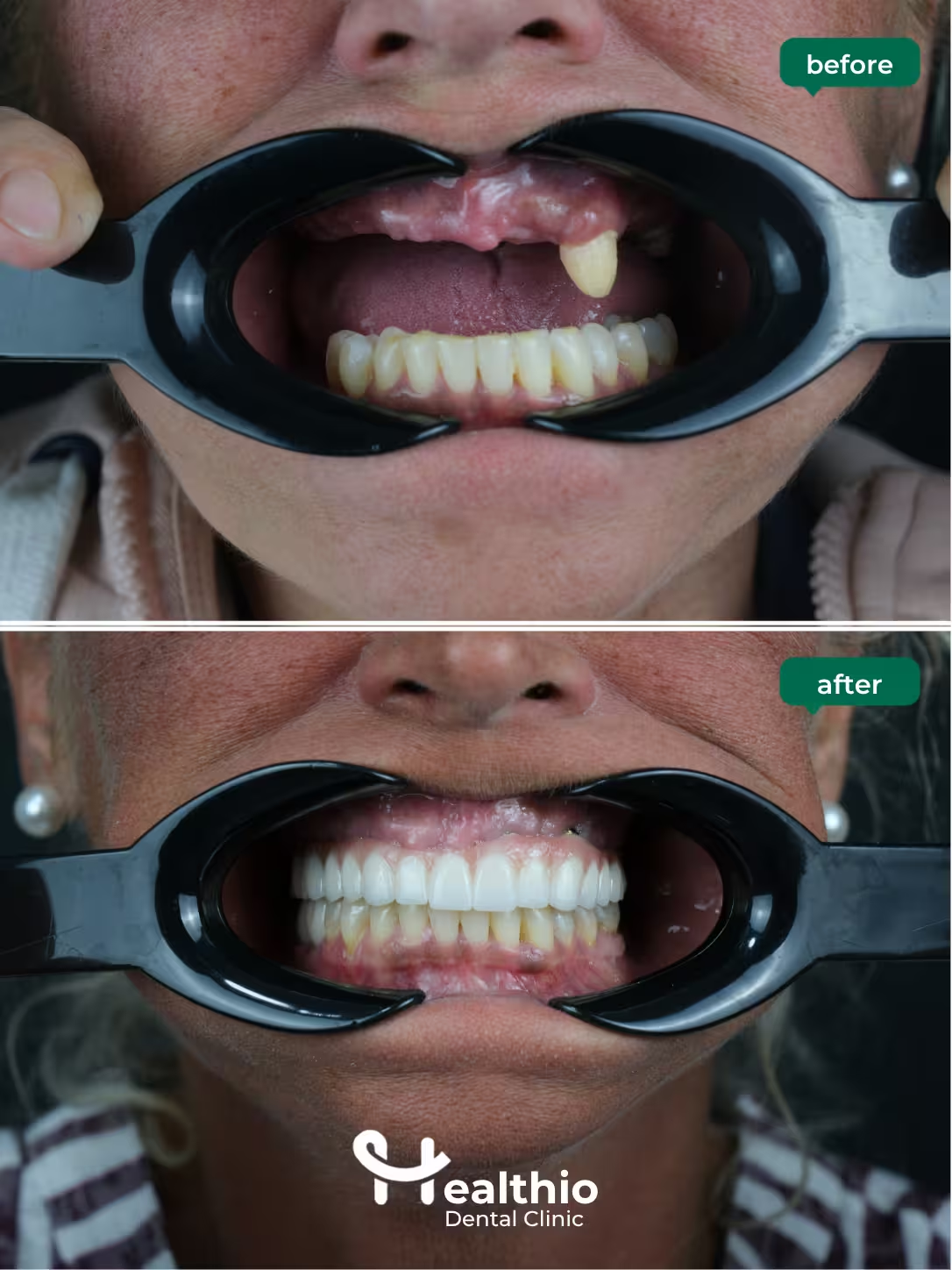
Cheaper does not mean worse. All-on-4 was designed precisely to restore an arch in a patient with bone loss without grafting, and in the right patient it is the treatment of choice rather than a compromise. The reverse holds too: six implants placed where the bone cannot hold them buys no safety. The option should come from the scan, not the budget.
How long it takes and how many trips
Implant treatment cannot be compressed into a single week, and the reason is biological rather than commercial. Osseointegration — bone fusing to the titanium surface — takes roughly three months in the lower jaw and up to six in the upper jaw.
Be careful with "implants in one week" offers. Same-day teeth are real, but they mean a temporary crown on the day of surgery. If an offer promises final implant crowns within seven days, ask directly when osseointegration is supposed to happen — either the work fitted at the end of the first trip is temporary, or the healing stage has been skipped.
See the procedure
Bone grafts and sinus lifts
After a tooth is lost the ridge starts to shrink, fastest in the first year. Someone who has worn a denture for years usually has considerably less bone than they expect. That is why two conditional items can overturn an earlier estimate: bone grafting and sinus floor elevation.
The upper and lower jaw are also two different surgical situations. Lower-jaw bone is denser, which makes primary stability easier to achieve; upper-jaw bone is more spongy and the maxillary sinus limits the available height. That difference shows in the data: implant survival is higher in the mandible than in the maxilla, with bone quality given as the main reason (retrospective study, PMC). In a long-term All-on-4 follow-up of 3–17 years, implant-level survival was 97.4% in the maxilla and 98.9% in the mandible (long-term study, PMC).
The reassuring part is that these are predictable procedures. Systematic reviews show implants placed after sinus floor elevation achieve survival and marginal bone levels comparable to implants in native bone, though the procedure itself carries a higher rate of surgical complications (systematic review, PubMed).
Three questions to ask in writing before you book a flight
1. Based on my scan, do you expect a graft or a sinus lift — and if so, how much does it add to the price and to the timeline?
2. What happens if that decision is only made during surgery? Who approves the extra cost, and when?
3. Is there a plan without grafting — angled implants, for example — and why was it or was it not chosen?
How long implants last — the evidence
A price only means something next to a lifespan. The published data is reasonably consistent. A systematic review with meta-analysis put ten-year implant survival at 96.4% (95% CI 95.2–97.5) (PubMed). For All-on-4 specifically, ten-year cumulative implant-level survival was 96.2% with a success rate of 93.5% (PMC).
What those numbers mean
They describe individual implants in studied groups, not a guarantee for one patient.
Survival is not the same as success. An implant can still be in the bone and yet need treatment.
The review authors themselves note limitations: uneven methodological quality and loss to follow-up.
The cost nobody mentions
The bridge wears out faster than the implants. The prosthetic work may need replacing while the implants are still integrated.
Hygiene and reviews are not optional. Inflammation around the implant is the leading cause of late failure.
Smoking and untreated grinding both worsen the outlook and should be discussed before treatment, not after.
What to demand from a written quote
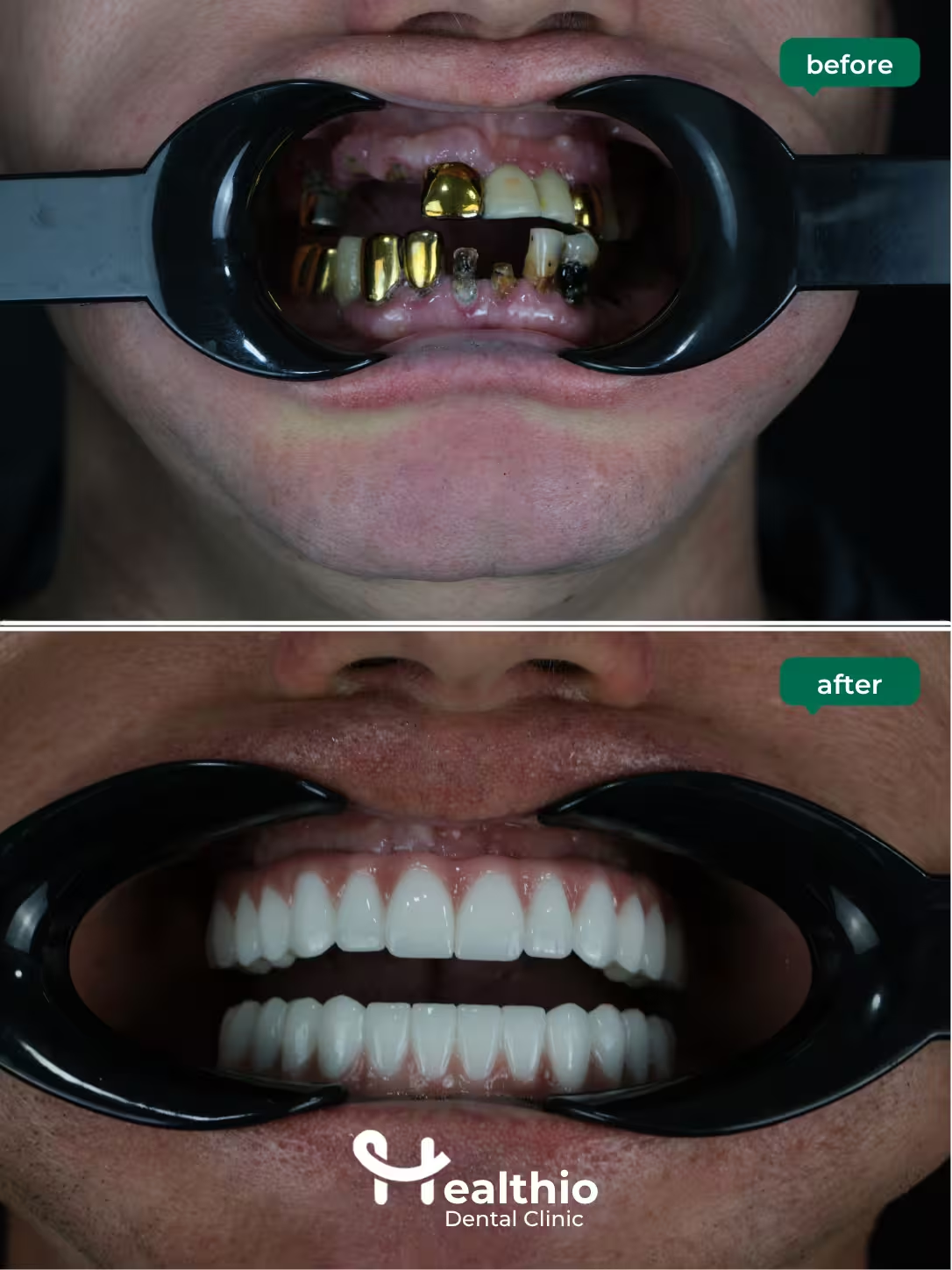
This is the only way to compare two offers fairly. A single figure with no breakdown says nothing — the same number can cover a finished restoration or only the surgical stage.
A quote should state
Scope: one arch or both, upper or lower, how many units.
The implant system by manufacturer name — not the phrase "premium implants".
Temporary and final restoration materials listed separately.
Conditional items — grafting, sinus lift — priced up front.
Guarantee and aftercare terms: what is covered, for how long, who pays for travel if a correction is needed.
Warning signs
A quote without a scan. Without CBCT nobody knows how much bone you have.
An unnamed implant system. Years from now you will need the exact name for servicing at home.
Final teeth in a few days with no explanation of when integration occurs.
Time pressure — a discount valid until tomorrow. Losing teeth took years; the decision can wait a week.
The cheapest quote and the most expensive quote rarely describe the same treatment. Before you call one a bargain, set them side by side line by line. Very often the difference is not the clinic's margin but the number of implants, the bridge material, or the fact that one quote includes grafting and the other leaves it out.
Frequently asked questions
Antalya, Turkey
Get the plan first, the flight second
Send us photos and a recent panoramic X-ray or CT scan, and you will get a written treatment plan: which arch, how many implants, which final bridge, whether we expect bone surgery — with every item priced separately. If a full implant restoration is not the best answer in your case, we will tell you that too.
Filo Apartmanı, Fener, Tekelioğlu Cd. No:51/B, 07160 Muratpaşa / Antalya
Written and clinically reviewed by
The Healthio dental team, Antalya
Healthio is a dental clinic in Antalya treating patients from the UK and across Europe, with implant surgery and prosthetics carried out on site. Meet the clinical team →
Published: 3 September 2026 • Last clinical review: 3 September 2026.
Important
This page is for information and does not replace a clinical examination. Whether implants are the right answer in your case, how many would be needed and whether bone surgery is required can only be established after an examination with 3D imaging. The survival figures quoted come from published studies of groups of patients and are not a promise of an individual outcome; the authors of those reviews note methodological limitations in the available data. No dental treatment can be guaranteed, and implant placement is surgery with a risk of complications. Discuss treatment abroad with your own dentist before deciding.