Written and clinically reviewed by the Healthio dental team, Antalya.
In short
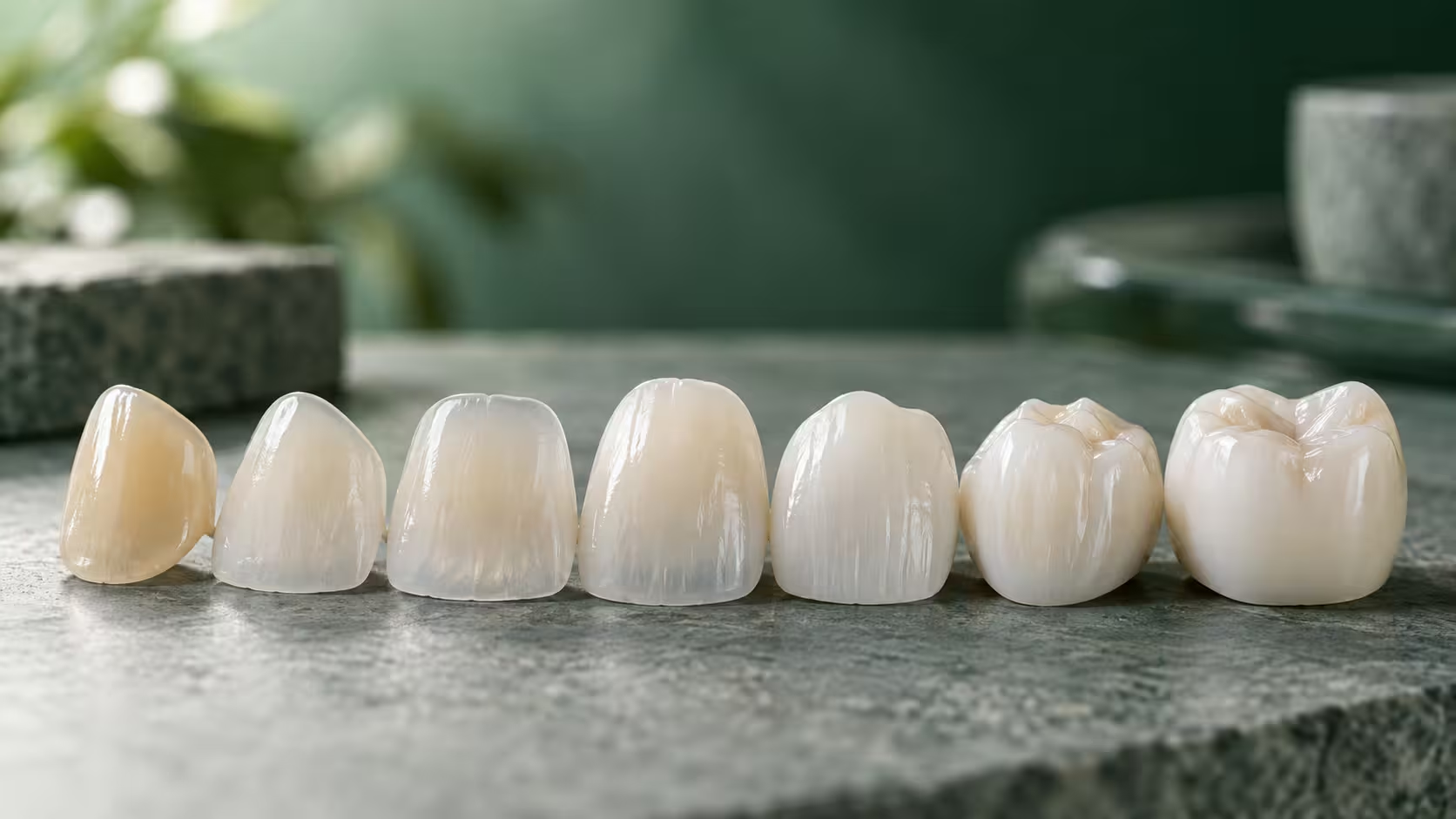
Turkey teeth last as long as the material they are made of: composite bonding around 4 to 8 years, E-max veneers and crowns 10 to 15 years or more, zirconia crowns 10 to 15 years, and implants often 20 years or longer. Where the work was done does not change those numbers — the material, the amount of natural tooth kept, and how you look after it do.
“Turkey teeth” is not one treatment. It is a nickname for several very different ones, and each has its own lifespan.
The part most clinics skip: every one of these eventually needs replacing. If you are 30, you should plan for at least one or two replacement cycles in your lifetime — and that cost belongs in the decision today, not in 12 years.
On this page
027 things that shorten their life
03Care routine: daily, 6-monthly, yearly
04What a guarantee covers — and what it doesn’t
05When to replace them, and what it costs
06How remote follow-up works
07Frequently asked questions
01
Turkey teeth lifespan by material
When someone asks “do Turkey teeth last?”, the honest answer starts with another question: which Turkey teeth? A set of composite veneers and a set of zirconia crowns can look identical on the day you fly home and behave completely differently five years later. If you are still working out which option you were quoted for, our Turkey teeth guide explains each one.
So how long do Turkey teeth last, treatment by treatment? The ranges below reflect published survival data and what we see in practice. They assume good placement and reasonable care; heavy grinding or poor hygiene pushes every figure towards the lower end.
Ranges are drawn from systematic reviews of veneer, crown and implant survival (listed under “Independent sources” below) and describe typical outcomes, not a guarantee for any individual mouth.
How long do veneers last from Turkey compared with the UK? The same. An E-max veneer is pressed from the same ceramic by the same manufacturer wherever it is made. What changes the answer is how much enamel was kept: veneers bonded to enamel last markedly longer than those bonded to dentine. That is the question to ask any clinic — see E-max veneers in Turkey for what minimal preparation looks like.
02
7 things that shorten the life of Turkey teeth
The horror stories that made “Turkey teeth” a headline were rarely about the ceramic failing. They were about what was done to the teeth underneath. These are the seven factors that decide whether a restoration reaches the top of its range or the bottom.
- Over-preparation. Filing healthy teeth down to pegs for crowns that could have been veneers removes the enamel that holds a restoration best, and raises the risk of the nerve dying later. This is the single biggest factor, and it is decided before anything is fitted.
- Grinding and clenching (bruxism). Night-time grinding puts forces on ceramic many times higher than chewing. Without a night guard, it is the most common reason for chips and fractures.
- Gum disease. Crowns and veneers sit at the gum line. Inflamed or receding gums expose margins, trap plaque and eventually lose the support the whole restoration depends on.
- Decay at the margins. The ceramic cannot decay, but the tooth under its edge can. Sugar frequency matters more than sugar quantity.
- Smoking. It stains composite, slows gum healing and is the strongest single risk factor for implant failure.
- Using teeth as tools. Opening packets, biting nails or pens, crunching ice. Ceramic is strong in compression and weak against sudden sideways loads.
- Skipping check-ups. Most failures start small — a leaking margin, a hairline chip, early gum inflammation — and are cheap to fix when caught. Left for two or three years, the same problem becomes a replacement.
03
Care routine: daily, every six months, every year
None of this is specialised. It is the routine for natural teeth, with a little more attention to the gum line — because that is where restorations fail.
Every day
Brush twice for two minutes with a soft brush and a non-abrasive fluoride toothpaste. Whitening pastes scratch composite.
Clean between teeth with floss or interdental brushes — around implants, brushes rather than floss.
Wear your night guard if one was made for you. Every night, not just on stressful ones.
Every six months
A check-up and hygiene visit with your local dentist or hygienist. Tell them what you have and which materials — your treatment record lists it.
Composite polishing if you have bonding: a quick re-polish keeps it from dulling and staining.
Every year
Bitewing X-rays as your dentist advises, to catch decay under crown edges that cannot be seen.
Send us an update — photos and any new X-rays — so your file stays current and a guarantee claim, if ever needed, has a history behind it.
04
What a guarantee covers — and what it doesn’t
A guarantee is only as useful as its small print, and most disappointment with treatment abroad comes from assuming it covers more than it does. Whatever clinic you choose, get the guarantee in writing before treatment, and read it alongside the list below.
Normally covered
Manufacturing and laboratory defects — a crown or veneer that cracks or debonds under normal use.
Remaking the restoration at no charge for the unit itself.
Implant fixtures that fail to integrate, subject to the conditions below.
Normally not covered
Accidents and trauma — a fall, a sports injury, biting something hard.
Damage from grinding when a night guard was prescribed and not worn.
Decay or gum disease caused by missed check-ups or poor hygiene.
Travel and accommodation for the return visit, unless stated otherwise.
Almost every guarantee depends on regular check-ups. Keep the receipts or a note from your local dentist each time. It is the difference between a remade crown and an argument.
05
When to replace them, and what it costs
Restorations are rarely replaced on a timetable. They are replaced when something changes. These are the signs worth booking an appointment for:
- A dark line or visible edge at the gum — usually gum recession, sometimes a leaking margin.
- Sensitivity or pain in a tooth under a crown or veneer, which can mean decay or a nerve problem.
- A chip, crack or loose restoration. Small chips in composite can be repaired; ceramic usually needs remaking.
- Staining that no longer polishes out — mostly a composite issue.
- Bleeding or swelling around an implant. Get this seen quickly; early peri-implantitis is treatable.
Replacing a restoration costs roughly what it cost the first time, per unit, and sometimes a little more because the old one has to be removed. Typical per-unit figures in Antalya in 2026:
Ranges are typical market figures, not quotations. A written per-unit quote follows an examination; see dental crown cost for the full UK comparison.
Why the first preparation decides the second bill
A veneer on a well-kept tooth can usually be replaced by another veneer. A crown on a heavily cut tooth can only be replaced by another crown — or, if the tooth has not survived, by an implant. Keeping more natural tooth the first time keeps the cheaper options open for the second.
06
How remote follow-up works
The fair criticism of treatment abroad is distance: if something goes wrong in month eight, your dentist is a flight away. Remote follow-up does not remove that, but it means most questions never need a flight at all.
- You leave with a full treatment record — every tooth treated, the material, the laboratory and the shade — so any dentist at home can see exactly what is in your mouth.
- Check-ins at set points in the first year: we ask for photos and a short update on how your bite and gums feel.
- If something changes, you message us first with photos, and an X-ray from your local dentist if one is needed. Many issues — a sore spot, a slightly high bite — can be managed locally with our guidance.
- A return visit is planned only when it is needed, and you are told in advance what will be done and what, if anything, it will cost.
Keep a local dentist. Remote follow-up works alongside routine care at home; it does not replace it. A dentist who sees you every six months will spot problems long before they show up in a photo.
07
Frequently asked questions
Antalya, Turkey
A plan built to last, not just to look good on day one
Send us photos and a recent X-ray. You will get a written plan listing each tooth, the least invasive option that will work for it, the material and laboratory, the expected lifespan, and the guarantee terms — before anything is booked.
Filo Apartmanı, Fener, Tekelioğlu Cd. No:51/B, 07160 Muratpaşa / Antalya
Written and clinically reviewed by
The Healthio dental team, Antalya
Healthio is a dental clinic in Antalya treating patients from the UK and across Europe, with restorative and cosmetic work carried out on site. Meet the clinical team →
Published: 22 September 2026 • Last clinical review: 22 September 2026.
This page is for information and does not replace a clinical examination. Lifespan ranges are typical outcomes drawn from published research and clinical experience; individual results depend on the condition of your teeth and gums, your bite, your habits and your aftercare. Prices are typical market ranges in Antalya, not quotations. Guarantee terms vary between clinics — rely only on the written terms you are given before treatment. Discuss treatment abroad with your own dentist before deciding.